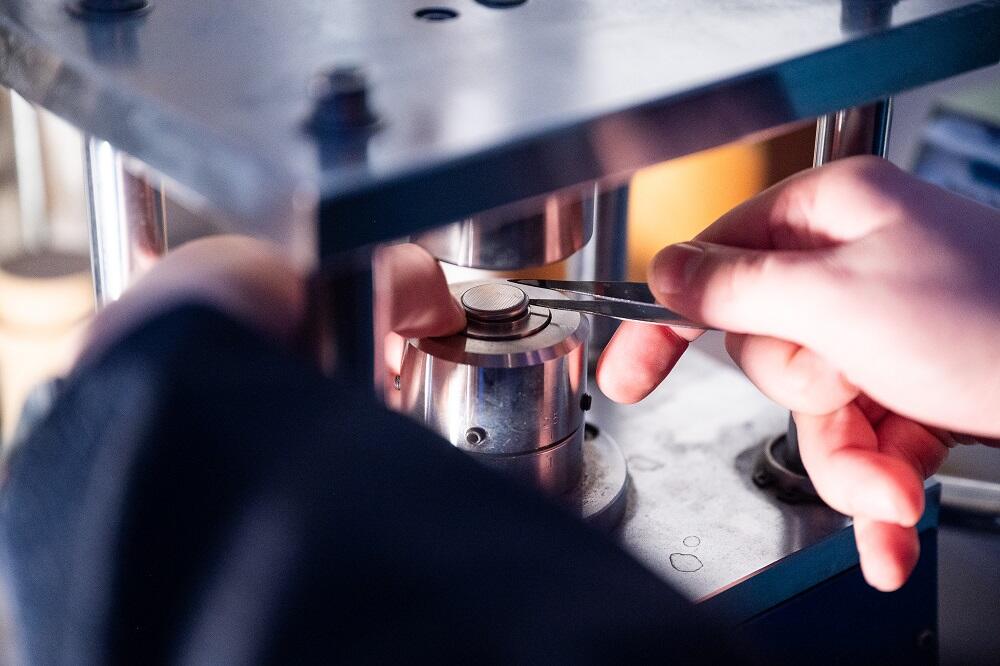
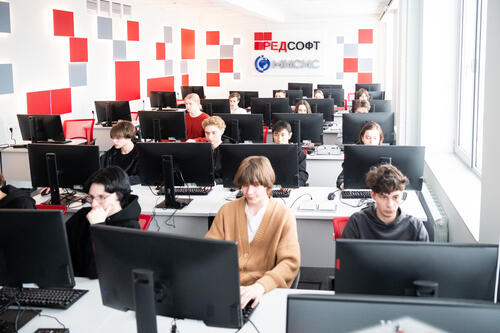
NUST MISIS hosted the Russia—China Education Festival, a platform for open dialogue and the exchange of best practices among universities, research centers and cultural institutions of both countries. During plenary sessions, panel discussions and master classes, participants discussed current areas of cooperation and strengthened humanitarian ties in education, science and culture.
Russia’s Minister of Science and Higher Education Valery Falkov sent a welcoming address to the guests. He noted that 2026 and 2027 have been designated the Russia—China Years of Education, and the festival at NUST MISIS serves as a kind of prologue: “It is a great honor for us to open this large-scale forum in Moscow. Its organization is clear evidence of the strength and depth of the comprehensive partnership and strategic cooperation between our countries. Strong inter-university relations and student exchanges have always played an important role in Russia—China relations. Today, as our bilateral cooperation steadily develops, the demand for highly skilled professionals is growing significantly.”
The opening ceremony featured remarks by Vladimir Oshchepkov, Deputy Director of the First Asian Department of the Russian Ministry of Foreign Affairs; Cao Shihai, Minister-Counselor for Education of the Embassy of the PRC in Russia; Alina Anisimova, Head of the Higher Education and Science Division of Rossotrudnichestvo; Liu Limin, President of the China Education Association for International Exchange; and Andrey Voronin, NUST MISIS Vice-Rector for Education.
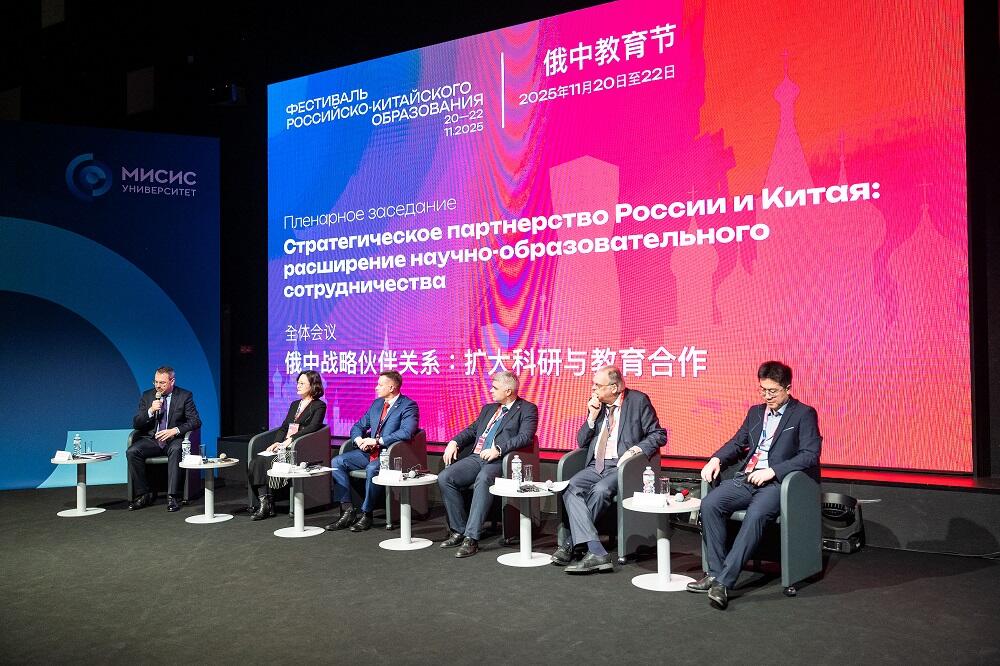
The festival opened with the plenary session “Strategic Partnership between Russia and China: Expanding Scientific and Educational Cooperation,” moderated by Konstantin Mogilevsky, Deputy Minister of Science and Higher Education of Russia.
“Russia and China have a rich history of cultural and scientific ties. In recent years, bilateral relations have reached a fundamentally new level and now stand as a true example of comprehensive partnership and strategic cooperation. We are united by a shared commitment to innovative development amid the current geopolitical context. We open the business program of the festival by discussing key issues of Russia—China cooperation in the humanitarian sphere, reviewing best practices and exploring prospects for scientific and educational collaboration between our countries,” he said.
Speakers discussed technological development, prospects for joint research, the internationalization of education, and new formats of youth cooperation. Participants then explored exhibition spaces dedicated to the cultural heritage and contemporary research of Russia and China, and attended two panel sessions: “Integration of Science and Education” and “Digital Transformation of Science and Education in Russia and China.” Guests also joined workshops on Chinese calligraphy and the tea ceremony.
On the second day of the festival, participants attended roundtable discussions and thematic sessions, explored the development of language programs and inter-university cooperation, and took part in lectures on the digitalization of Chinese language learning, as well as workshops on mahjong, Zhostovo painting and artistic embroidery.
The final day featured a vibrant cultural program with musical and dance performances, a hanfu show, demonstrations of wushu elements and performances by creative groups from both countries.
“NUST MISIS has long-standing and strong ties with Chinese educational institutions. As early as the 1950s, our scientists and staff contributed to the establishment of the University of Science and Technology Beijing (USTB). For decades, our university has trained engineers and researchers, many of whom have made significant contributions to the development of the PRC. Today, NUST MISIS collaborates with China’s leading research and educational centers, including Tsinghua University, Beihang University, Harbin Institute of Technology and others. Together, we are creating new opportunities for students of our countries,” said NUST MISIS Rector Alevtina Chernikova.
The festival was organized by the Ministry of Science and Higher Education of Russia, the Federal State Budgetary Institution Intereducation, and NUST MISIS.