Researchers at NUST MISIS have patented a hybrid aluminum-based composite designed for structural components of aircraft, compressor blades, turbine disks of jet engines, air intakes, and other parts operating under peak loads. The material combines strength, light weight, and resistance to high temperatures.

Aluminum has a low density, which makes it widely used to reduce the weight of structures. However, conventional aluminum alloys and modern aluminum matrix composites reinforced with ceramic particles have a significant drawback: at temperatures above 300°C, they lose much of their strength.
“Scientists at NUST MISIS have developed and patented an innovative aluminum-based composite that, at temperatures above 300°C, demonstrates strength close to that of structural steel while remaining almost three times lighter. The development will be in demand in aviation, space industry, and mechanical engineering, where components and equipment operate under extreme conditions and in aggressive environments,” said Alevtina Chernikova, Rector of NUST MISIS.
The researchers created a hybrid composite material in which the aluminum matrix is simultaneously reinforced with submicron aluminum oxide particles and titanium powder.
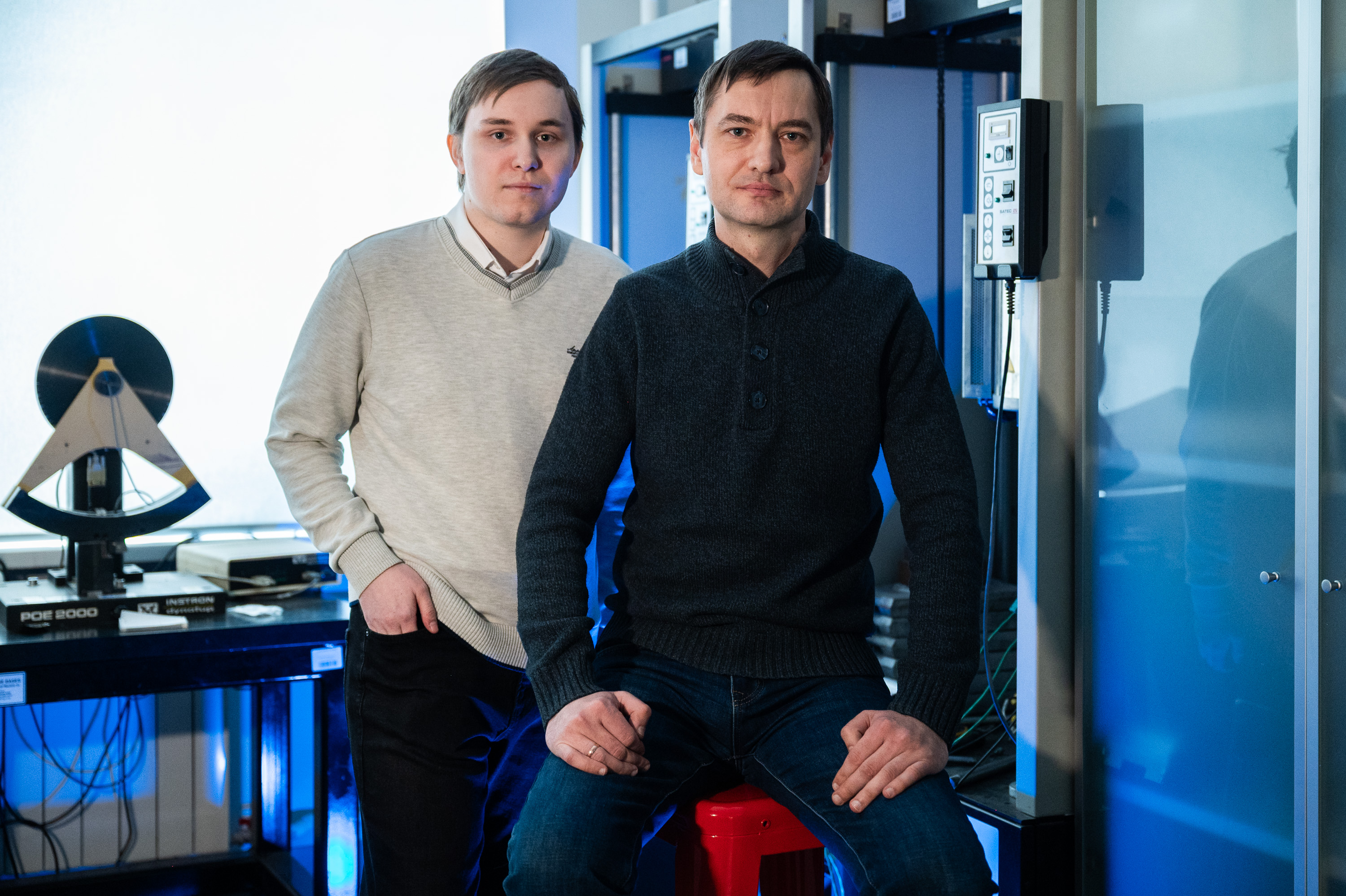
“We did not simply mix two types of additives—we created a system in which one of the components (titanium) interacts with the aluminum matrix at every stage, from alloying to annealing, enhancing the strengthening effect of aluminum oxide,” said Alexey Prosviryakov, Candidate of Technical Sciences and Senior Researcher at the Laboratory of Ultrafine-Grained Metallic Materials at NUST MISIS.
Aluminum oxide particles, which provide increased stiffness to the composite, are combined with titanium powder. During heat treatment, titanium reacts with aluminum to form hard, refractory intermetallic particles. These particles improve resistance to plastic deformation even at high temperatures, creating an additional strengthening effect.
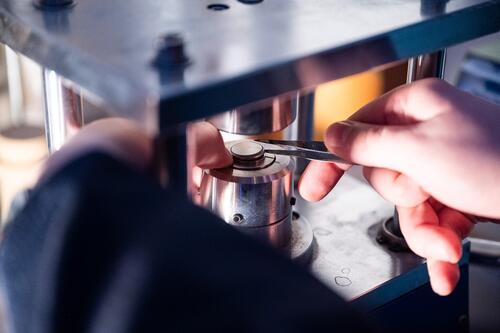
“Equally important is the method used to create the material—mechanical alloying. Intensive processing in a planetary ball mill refines the structure down to the nanoscale, forming numerous ultrafine and stable grains. These grain boundaries significantly enhance the material’s strength,” added Dmitry Bekarevich, Research Assistant at the Department of Non-Ferrous Metallurgy, NUST MISIS.