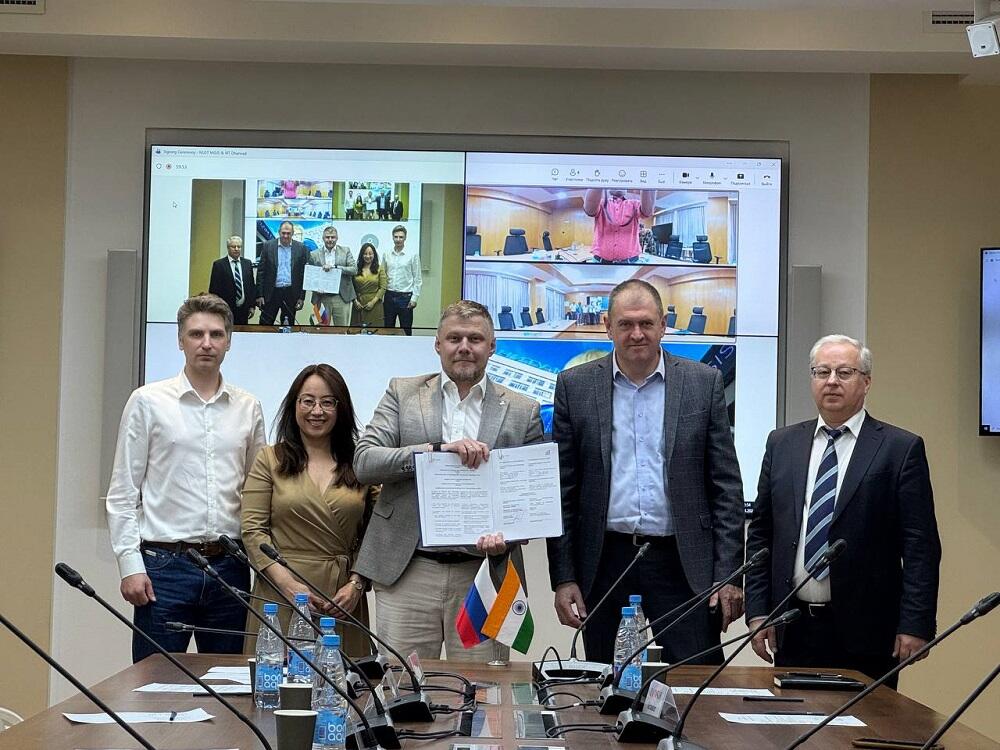
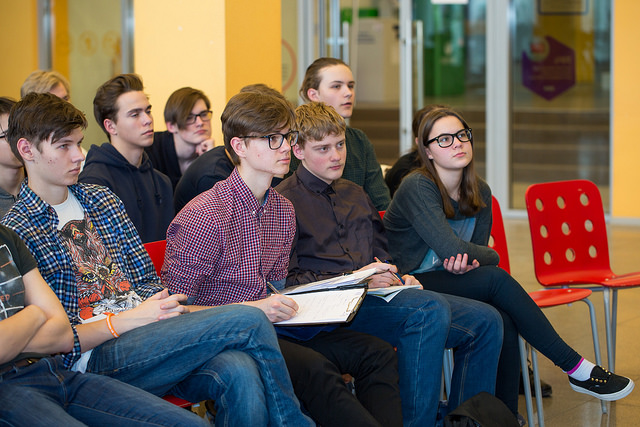
On March 22nd, 2018, lectures and a teleconference with specialists from the European Organization for Nuclear Research (CERN) were held at NUST MISIS. Lyceum and gymnasium students, as well as students from schools with advanced physics & mathematics programs learned how the Large Hadron Collider helps us study the properties of the Universe.
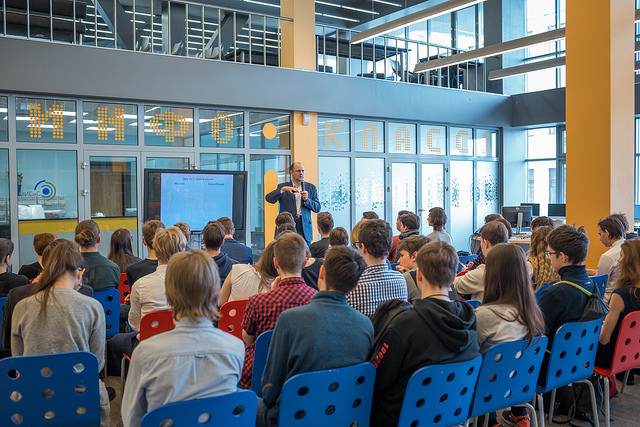
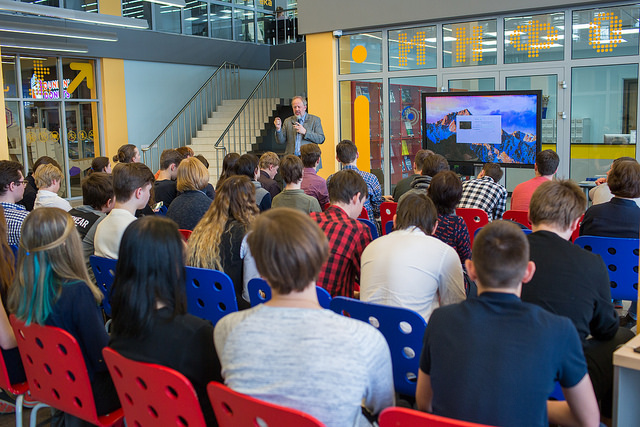

Lectures on modern approaches to understanding the mysteries of the universe were given by Fyodor Ratnikov and Denis Derkach, both employees of the Yandex School of Data Analysis—an organization participating in the LHCb and CERN experiments. Professor Vladimir Shevchenko, a leading expert at the NUST MISIS MegaScience Center for Infrastructure Cooperation, also spoke.
During the teleconference with CERN (located in Geneva, Switzerland), leading scientists Pavol Štefko and Luca Pescatore explained how to separate real data from “noise”, based on results obtained from the Large Hadron Collider. After that, all the participants took a laboratory test and based on the results they got, received a certificate of completion for a master class on data processing from the Large Hadron Collider.
CERN holds videoconferences for students around the world on a regular basis.
NUST MISIS conducted a live broadcast of the lectures on Vkontakte (a social media platform) as part of the Russian Ministry of Education and Science’s project. Video material is available on NUST MISIS`s official page on VK.