Experts from MISIS University took part in the International Industrial Exhibition INNOPROM. Central Asia in Tashkent. During the event, the university delegation signed three cooperation agreements with international partners and presented developments in new energy technologies, materials science, and environmentally sustainable solutions.
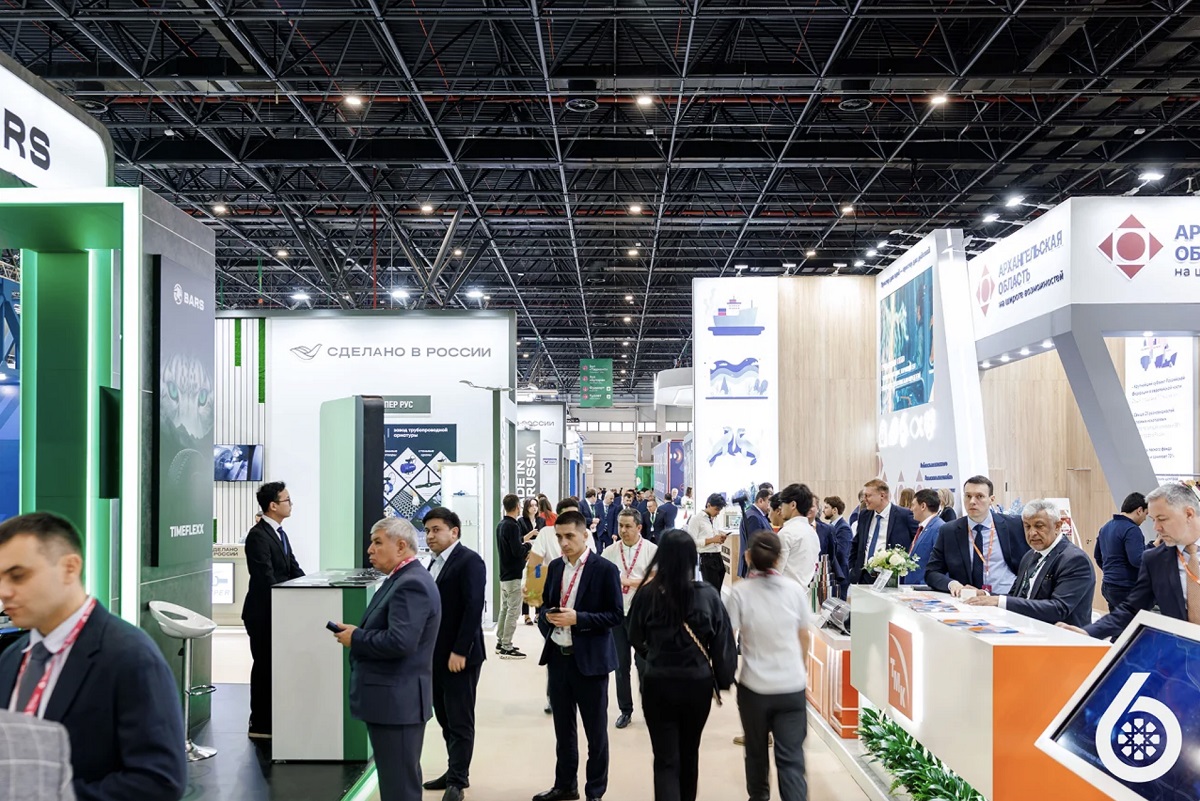
The exhibition brought together leading experts, business representatives, and government officials from 35 countries, including Russia, Uzbekistan, Azerbaijan, Belarus, Kazakhstan, China, Kyrgyzstan, Saudi Arabia, and Türkiye. Participants discussed industrial and scientific-technological cooperation and identified new growth opportunities for the region.
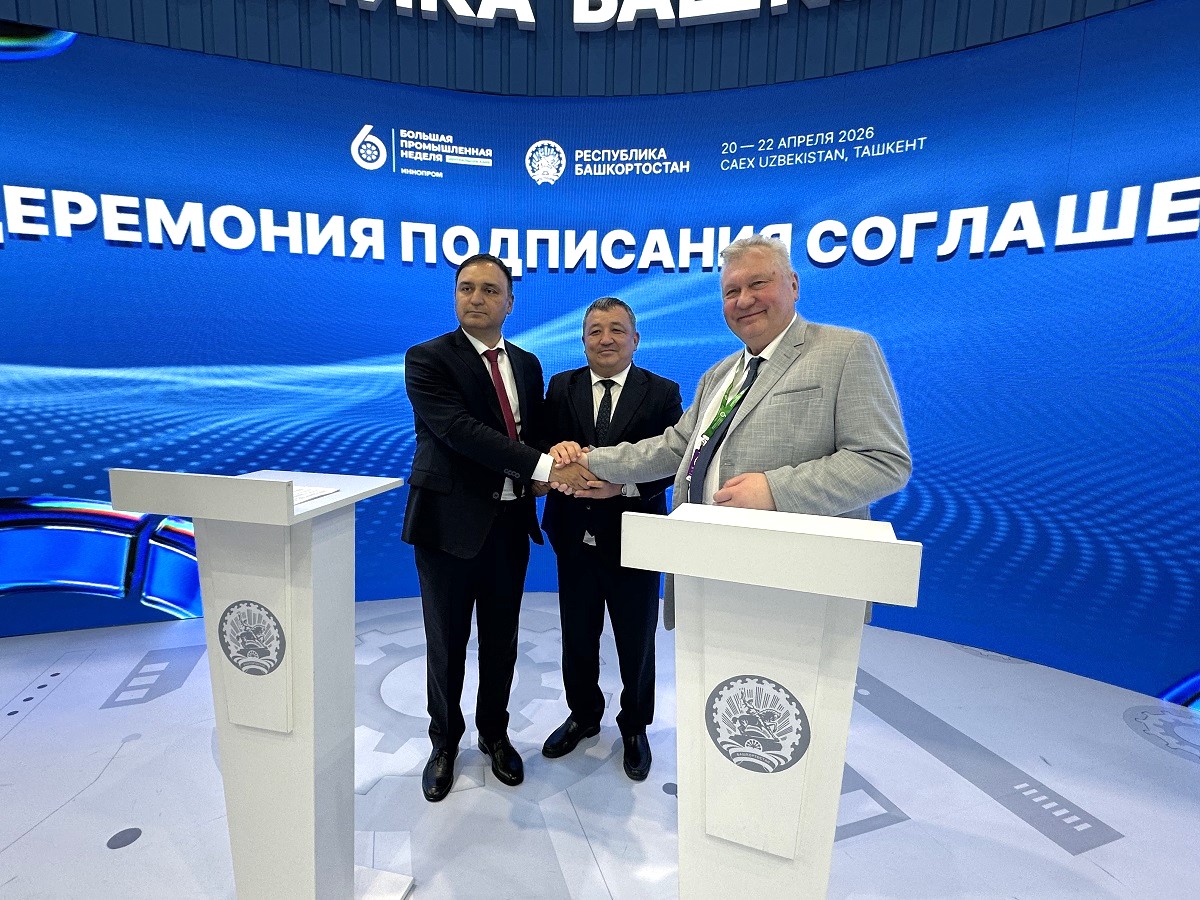
As part of the business program, Mikhail Filonov, Vice-Rector for Research and Innovation at MISIS University, and Bakhodir Abdullaev, Chairman of the Management Board and CEO of JSC Uzmetkombinat, signed a memorandum on joint educational and research activities based at the university’s Almalyk branch campus.
MISIS University also signed a cooperation agreement with Tashkent State Transport University, represented by Rector Abdulaziz Gulamov. The agreement is aimed at launching bilateral training programs for master’s and doctoral students. The parties also agreed to cooperate in scientific research and academic exchange initiatives.
Another cooperation agreement was signed by Mikhail Filonov, Vice-Rector for Research and Innovation at MISIS University; Farkhodbek Umarov, Director of the MISIS Almalyk Branch; and Dmitry Vladimirov, Deputy CEO for Mining Industry and Government Relations at Tsifra LLC. The partnership предусматривает the launch of joint educational programs in mining engineering, internships and practical training opportunities for students, as well as the establishment of research and educational centers and laboratories, including at the university’s Almalyk branch.
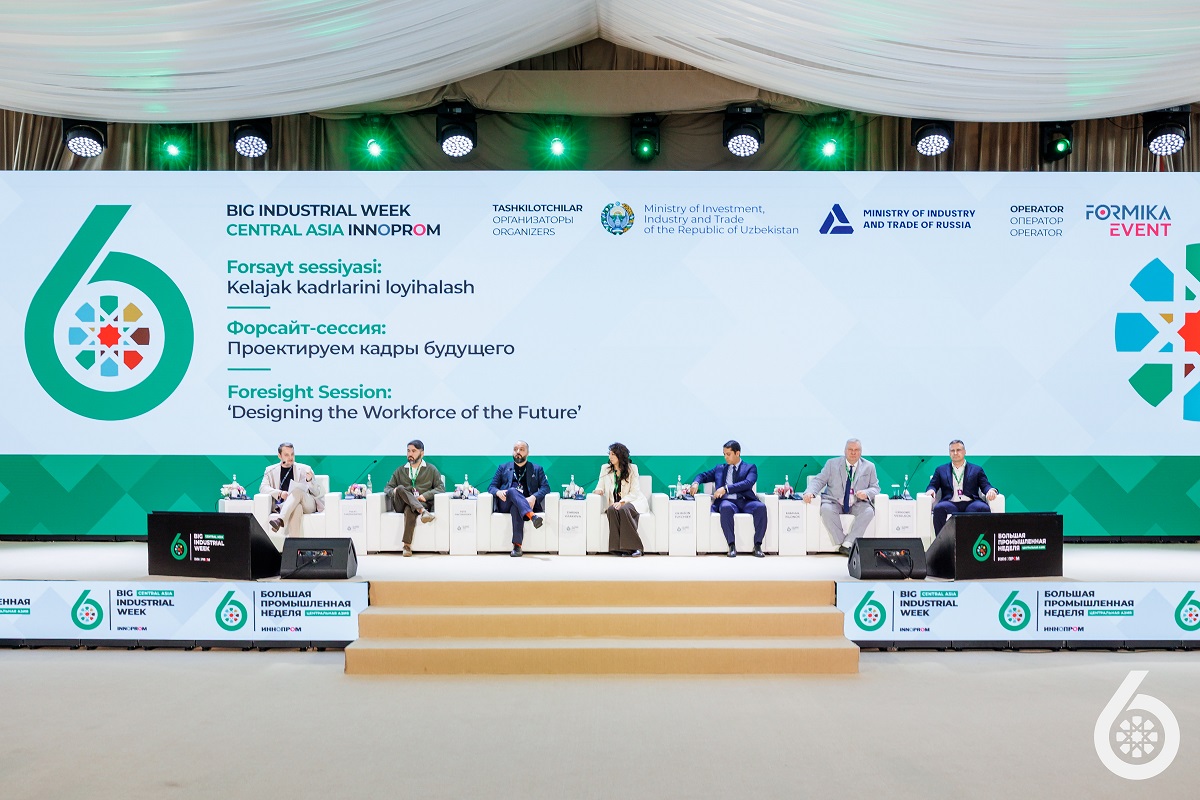
During the session “The Medical Devices Market of Uzbekistan and Russia: Opportunities for Joint Growth,” Mikhail Filonov presented MISIS University’s approaches to the development of medical technologies and the training of engineering personnel for high-tech industries. He also spoke at the foresight session “Designing the Workforce of the Future,” where participants discussed the transformation of engineering education, the implementation of dual education models, and strengthening cooperation between universities and industry to provide the industrial sector with highly qualified specialists.
In addition, the MISIS University delegation visited TMK enterprises and reached an agreement with Kobildjon Kozokov, CEO of the R&D Park by TMK research and production complex, to develop technical specifications for manufacturing projects and prepare a scientific and technical cooperation program for
The MISIS University exhibition was presented at the stand of the Russian Ministry of Industry and Trade and featured the following developments:
- The first scalable semi-transparent perovskite solar modules designed for integration into glass façades and building roofs. The panels allow architectural elements to generate electricity without reducing natural lighting. Developed by the Advanced Solar Energy Laboratory;
- An integrated-optical hydrogen sensor capable of detecting ultra-low hydrogen concentrations in the gas phase. Thanks to its integration with optical fiber systems, the sensor can be used in remote and hard-to-access locations where human presence is undesirable or dangerous. Developed by researchers from the Photonic Gas Sensors Laboratory;
- Complex mineral fertilizers produced from secondary by-products of ferrous metallurgy (sludges, slags, phosphogypsum) for manufacturing slow-release fertilizers. The technology makes it possible to recycle industrial waste while simultaneously improving soil fertility. According to test results, grain crop yields increased by more than 30% while maintaining grain quality. Developed by the team of the Department of Functional Nanosystems and High-Temperature Materials;
- Supercapacitors based on composite electrodes for use in renewable energy systems and portable electronics. The developed method for modifying Busofit carbon fabric with a conductive polymer demonstrated that the formation of polyaniline on the carbon fiber surface improves the capacitive performance of the composites. Developed by researchers from the Department of Physical Chemistry.
Participation in INNOPROM. Central Asia enabled MISIS University to showcase relevant scientific solutions, expand its network of partners, and outline new directions for international cooperation.
The International Industrial Exhibition INNOPROM is a key event for trade and industrial cooperation in Central Asia. The organizers are the Ministry of Investments, Industry and Trade of the Republic of Uzbekistan and the Ministry of Industry and Trade of the Russian Federation.