Scientists at NUST MISIS have developed an aluminum-based metal powder that is five times more ductile than existing alternatives while matching them in strength. Products made from the alloy retain their properties when heated to 300°C, making the material a promising solution for the aerospace, automotive, and energy industries
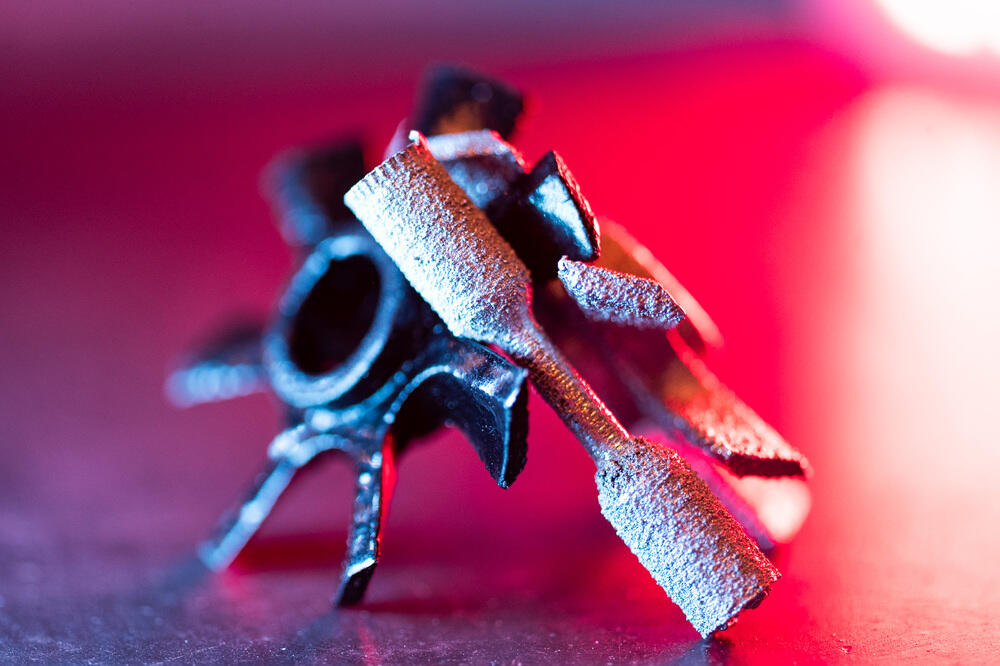
Today, additive manufacturing makes it possible to produce complex-shaped components that cannot be manufactured using conventional casting methods. Aluminum-silicon alloys, known as silumins, are the most commonly used materials for laser metal 3D printing. However, such structures quickly lose strength when exposed to prolonged heating, and their properties are difficult to improve through heat treatment. Nickel, cerium, or copper are therefore added to aluminum alloys to improve their heat resistance and high-temperature strength, but this increases the material’s density and cost. To address this issue, researchers at NUST MISIS have proposed an alternative based on an aluminum-calcium alloy system.
“The denser the material, the stronger it is and the lower the likelihood of cracks forming during operation. We managed to reduce the porosity of the samples by selecting the optimal combination of laser power and printing speed. At the same time, calcium can replace expensive alloying elements without compromising their effectiveness, while reducing the density of the material,” Nikolai Letyagin, PhD in Engineering, lead engineer of the research project at the Department of Metal Forming at NUST MISIS.
The samples withstand tensile loads of up to 366 MPa while being able to elongate by 30% before failure. This combination of high strength and ductility allows components to withstand mechanical loads more effectively, reducing the risk of sudden failure. The detailed research findings are available in the scientific journal Journal of Manufacturing and Materials Processing (Q1).
“One of the key advantages of the new alloy is its resistance to high temperatures. After heating to 300°C, it retains almost all of its hardness, whereas the hardness of conventional aluminum-silicon materials decreases by approximately one-third. This makes the alloy suitable for manufacturing components that operate at high temperatures, such as those used in engines and power systems,” Torgom Akopyan, DSc in Engineering, senior research scientist at the Department of Metal Forming at NUST MISIS.
The research was supported by grants from the Russian Ministry of Science and Higher Education (FZRR-2026-0005) and the Russian Science Foundation (Project No.