The first 2026 issues of MISIS scientific journals are now available online
The new issues present results of current research in materials science, metallurgy, and industrial economics, covering both fundamental and applied areas.

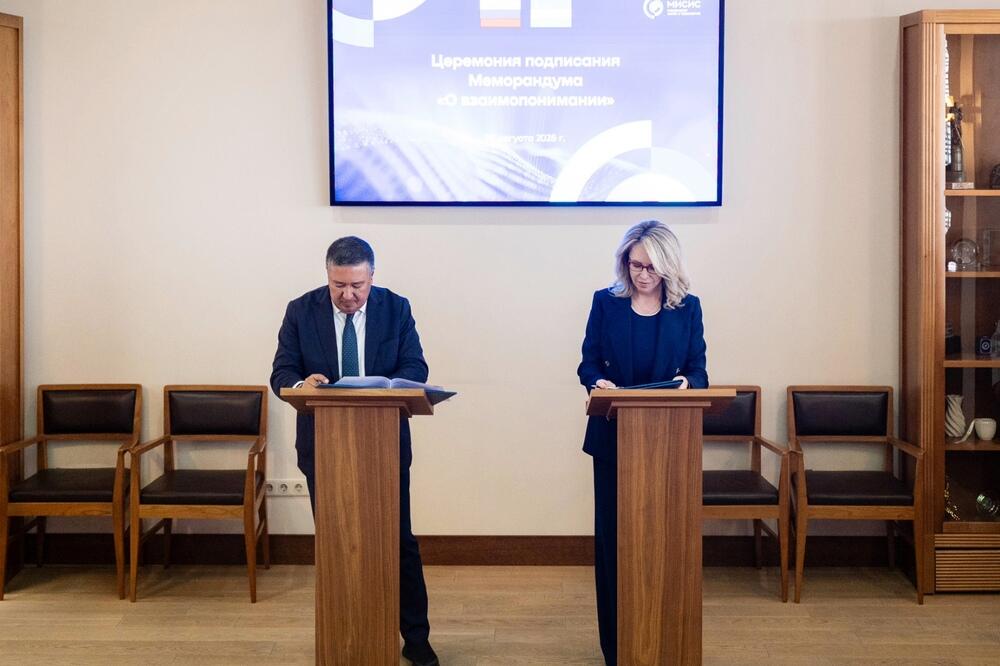
MISIS University has signed a cooperation agreement with the Indian Institute of Information Technology Dharwad (IIIT Dharwad). The primary focus of the partnership will be the development of student exchange programs in UX/UI design, based at the Department of Computer-Aided Design and Engineering at MISIS and the Department of Computer Science and Engineering at IIIT Dharwad.

The South African Department of Higher Education and Training has selected NUST MISIS as a strategic partner for African educational institutions to help strengthen their integration with industry.

As part of the 11th meeting of the Intergovernmental Russian-Namibian Commission on Trade and Economic Cooperation, held in Windhoek, NUST MISIS presented its experience in implementing joint educational programs with the participation of African industry partner

Researchers at NUST MISIS have patented a hybrid aluminum-based composite designed for structural components of aircraft, compressor blades, turbine disks of jet engines, air intakes, and other parts operating under peak loads. The material combines strength, light weight, and resistance to high temperatures.

Researchers at NUST MISIS have developed a machine learning algorithm that improves data classification accuracy in quantum computers. Instead of qubits, which are standard for quantum computing, the new method uses qudits, quantum elements with multiple levels of states. They enable complex quantum operations to be performed in fewer steps, significantly simplifying computations and giving specialists greater flexibility in representing and encoding information.


Researchers from MISIS University and Research Institute of Advanced Materials and Technologies (RIAMT) have developed a new method for producing carbon materials from cotton waste, reducing the processing time to just a few minutes instead of the usual one and a half hours. The materials obtained using this approach can be used in supercapacitors — devices designed for rapid energy storage and release that are widely used in electronics, transport, and energy storage systems.

Scientists of NUST MISIS have patented a new alloy with a unique combination of high strength and ductility, outperforming widely used industrial counterparts from the 1201 and 2219 series.

Researchers at MISIS University have developed a new aluminum alloy alloyed with calcium and titanium that demonstrates enhanced heat resistance and wear resistance.

A specialized laboratory established by RED SOFT, one of Russia’s leading software developers, has opened at the College of Computer Science at NUST MISIS. The new training space provides all the necessary infrastructure to prepare system administrators, engineers, database administrators, and IT infrastructure architects who will go on to work with domestic infrastructure software in the industrial sector, including metallurgy and related industries.

Matvey Ovseychuk, a fourth-year student at the College of Technologies of NUST MISIS, became the European champion in ice swimming as a member of the national team and won medals in individual events. More than 500 athletes from 32 countries competed for the title. The Russian team emerged as the overall leader, winning 54 medals and setting four world records.

Researchers from NUST MISIS, HSE University, and the Russian company QRate have introduced a new approach to predicting quantum error rates in quantum key distribution systems using machine learning algorithms.

Students of MISIS delivered an outstanding performance at the Northern Eurasia Championship of the International Collegiate Programming Contest (ICPC), one of the most prestigious competitions in competitive programming worldwide. The teams demonstrated strong results, reaffirming the university’s solid reputation in training specialists in algorithmic programming.

NUST MISIS took part in the international Education and Careers Expo 2026, held in Hong Kong with the support of the Consulate General of the Russian Federation. The exhibition was organized by the Hong Kong Trade Development Council under the auspices of the Government of the Hong Kong Special Administrative Region and is the largest education forum in the Greater Bay Area. This year, around 800 educational institutions from 20 countries participated in the event.

Physicists from the National University of Science and Technology MISIS and the Russian Quantum Center (RQC) have systematized modern approaches to implementing quantum algorithms using multidimensional quantum systems—qudits—and demonstrated how engaging additional energy levels of quantum carriers can simplify the execution of complex quantum operations and reduce their number compared to standard qubit-based schemes. Such approaches can improve the efficiency of quantum computing and bring the practical application of quantum algorithms closer in areas such as optimization, data processing, and the modeling of complex systems.

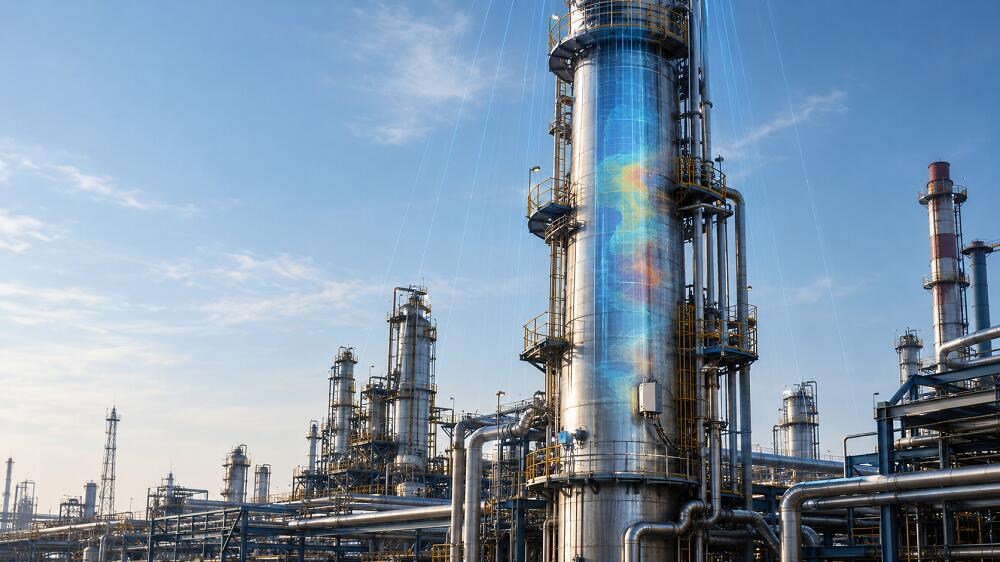
Scientists at University of Science and Technology MISIS patented a technology that makes it possible to recover rare refractory metals widely used in industry from spent petrochemical catalysts. The recovery rate reaches 95% for tungsten and up to 92% for molybdenum. The new technology has been implemented at the Unecha Hard Alloys Plant.

According to data from Scopus, the world’s largest database of scientific publications, in 2025 researchers from NUST MISIS published 890 papers. Two of these were featured in journals ranked among the top 1% worldwide by CiteScore: Reviews of Modern Physics and ACS Nano.