Russian scientists have introduced an ultra-sensitive detector capable of detecting individual photons with an efficiency of up to 98%. This development could serve as a foundation for the advancement of quantum computing, secure data transmission, and applications in astronomy and biomedical diagnostics.
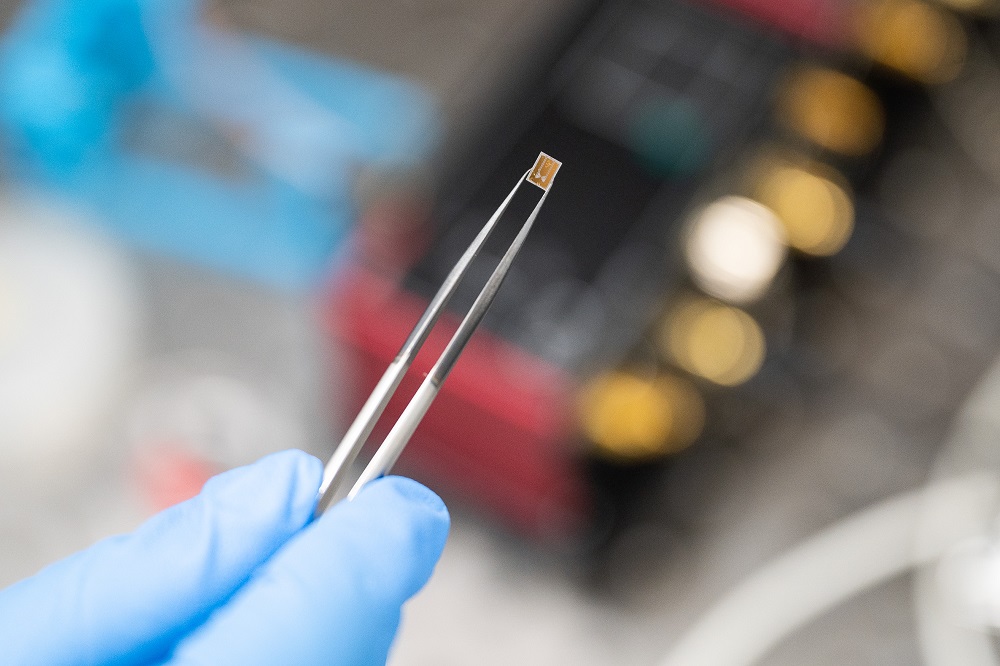

Superconducting single-photon detectors, invented in Russia, are considered a key element of quantum technologies. They allow for the detection of individual light quanta with record efficiency, temporal resolution, and low false alarm rates—necessary for the creation of photonic quantum processors, quantum cryptography systems, and biomedical imaging. However, traditional superconducting materials used to produce them have limitations: they require high-temperature heating (600—800°C), which significantly hinders scaling and integration with the most promising photonic platforms, such as gallium arsenide (GaAs) and thin-film lithium niobate (LNOI).
“The main advantage of the material is the ability to apply the film at room temperature, making it compatible with any substrates, including semiconductors, for which heating above 350°C is undesirable,” Vladislav Korovin, a laboratory researcher at the NUST MISIS Photonic Gas Sensor Laboratory.
Researchers from NUST MISIS, Moscow State Pedagogical University, Higher School of Economics, and the Russian Space Systems Corporation (RKCC) have demonstrated for the first time that detectors made from a molybdenum-rhenium (MoRe) alloy can not only be grown on the rough piezoelectric substrate of lithium niobate but also operate in single-photon and multi-photon modes across a broad range of wavelengths from visible to near-infrared (IR).
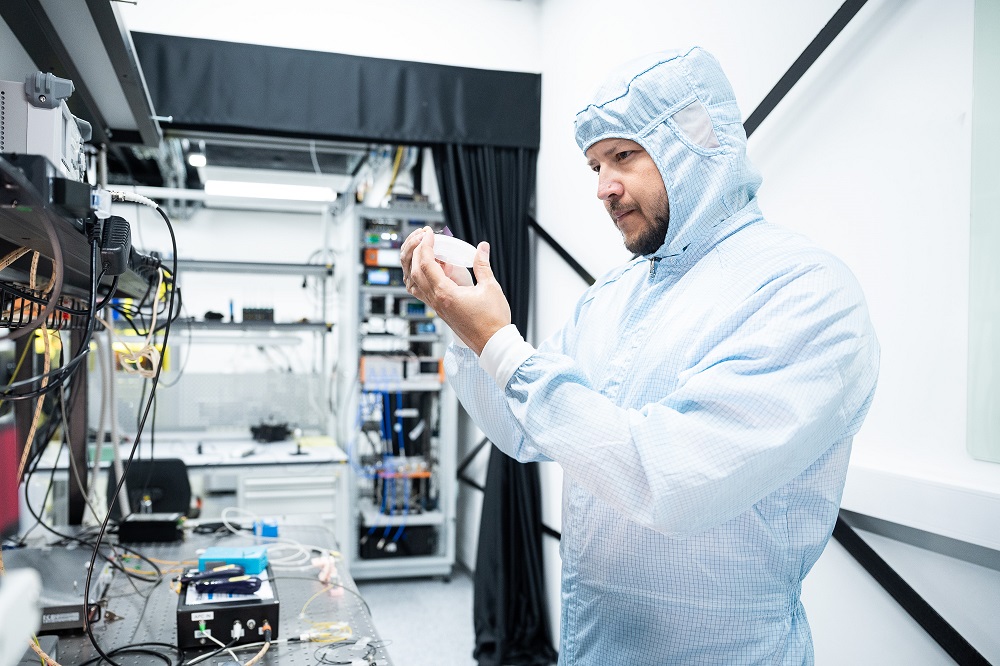
“We deposited a molybdenum-rhenium film onto a thin-film lithium niobate substrate—a material actively used to create miniature high-speed photonic integrated circuits. Thanks to the electro-optical effect of lithium niobate, we can precisely control light signals within the chip. The combination with the new superconducting coating enables the creation of compact and sensitive quantum devices, such as opto-radio frequency converters for the quantum internet. The creation of such an internet would fundamentally change the paradigm of quantum computing by linking separate quantum computers together,” Alexey Nevzorov, Ph.D. in Physics, researcher at the NUST MISIS Competence Center for Quantum Communications.
The newly developed detector demonstrated photon detection efficiency of up to 98% with light at a wavelength of 780 nm and 73.5% at 1550 nm—key ranges for photon chip operations. The device functioned at relatively high temperatures, which is uncommon for other amorphous superconductors, and its characteristics were comparable to the best samples of polycrystalline superconductors. The details of the research were published in the scientific journal Applied Physics Letters (Q1).
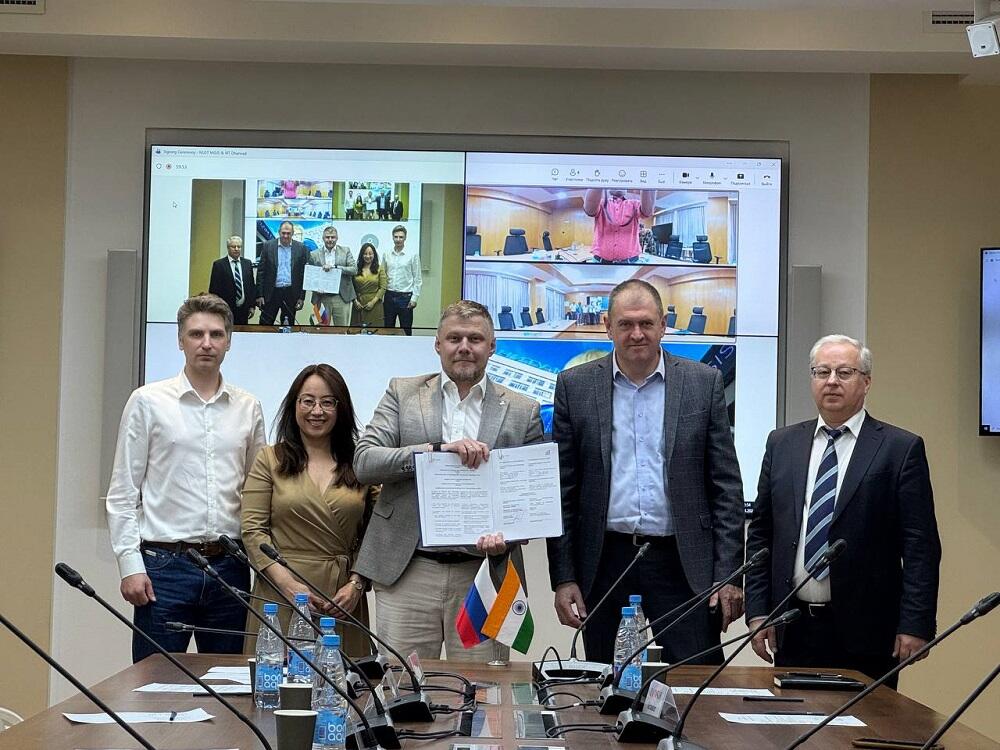
“This applied development was carried out as part of the NUST MISIS strategic technological project ‘Quantum Internet’ under the ‘Priority-2030’ program, with close collaboration between the university and industry. In particular, with our partner, LLC ‘Superconducting Nanotechnologies’ (Skontel), which operates in the global quantum sensor market. We hope that, thanks to our research and developments, the company will not only maintain Russia’s leading position in traditional markets but will also conquer new ones—India, Vietnam, Africa, and Latin America—where the development of quantum technologies is just gaining momentum, and access to technologies from Europe and the U.S. is severely limited,” Vadim Kovalyuk, Ph.D. in Physics, head of the Photonic Gas Sensor Laboratory at NUST MISIS.
The work was supported by the Russian Science Foundation (grant No.
and the Ministry of Science and Higher Education of the Russian Federation (FSME-2025-0004).