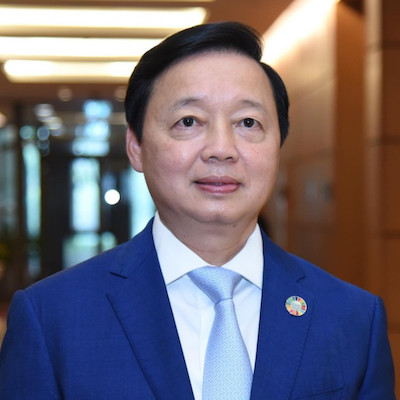
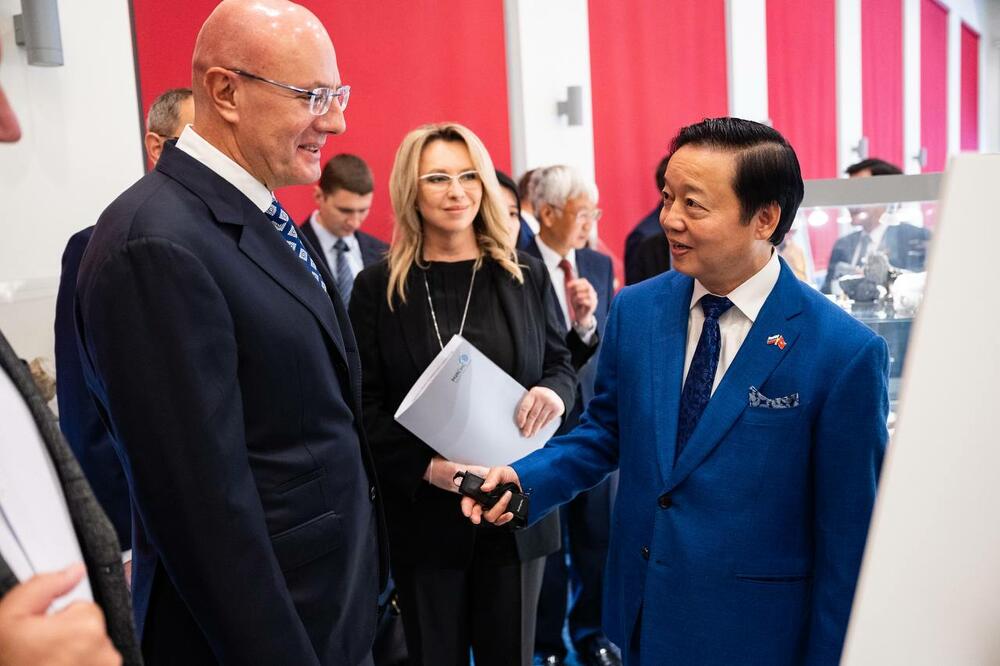
Tran Hong Ha
Deputy Prime Minister of Vietnam
Years of Study:
Field of Study: Technology and Integrated Mechanization of Underground Coal Mining, Moscow Mining Institute (now the College of Mining of NUST MISIS)
Vietnamese public official and politician. He currently serves as Deputy Prime Minister of Vietnam. Member of the 13th Central Committee of the Communist Party of Vietnam and Co-Chair of the Russia—Vietnam Intergovernmental Commission on Trade, Economic, Scientific, and Technical Cooperation.
Tran Hong Ha (born 1963) studied at the Moscow Mining Institute (now the College of Mining of MISIS University) from 1983 to 1991. He graduated with a degree in Technology and Integrated Mechanization of Underground Coal Mining and subsequently continued his studies in a full-time postgraduate program, successfully defending his dissertation for the degree of Ph.D. in Technical Sciences.
Tran Hong Ha comes from a distinguished mining family. His father, the renowned professor Tran Van Huynh, studied mining and metallurgy at Hanoi University of Technology and later transferred to the Moscow Mining University. After returning to Vietnam, Tran Van Huynh taught at Hanoi University of Mining and Geology, served as its rector in the 1970s—1980s, and worked as an advisor to the Vietnamese Ambassador to Russia from 1990 to 1995.
“By a happy coincidence, my father and I were both students of Anatoly Burchakov, a Soviet scientist and Honored Figure of Science and Technology of the USSR. Anatoly Semenovich was not just a lecturer for me, but a Teacher with a capital T — a person who gave me knowledge and skills that later proved invaluable in my work. Therefore, my first word is gratitude to all our professors for giving us knowledge and raising us to be useful members of society”.
Tran Hong Ha arrived in the USSR in 1983 and was enrolled in the first year of the Moscow Mining Institute in the specialty Technology and Integrated Mechanization of Underground Coal Mining. He lived in the “Gornyak-1” dormitory. During his student years, he completed mandatory internships at the Institute’s Elbrus educational and research center and at coal industry enterprises in the Donbas region, including the Donetskugol and Makeevugol production associations. He graduated with honors, receiving a red diploma.
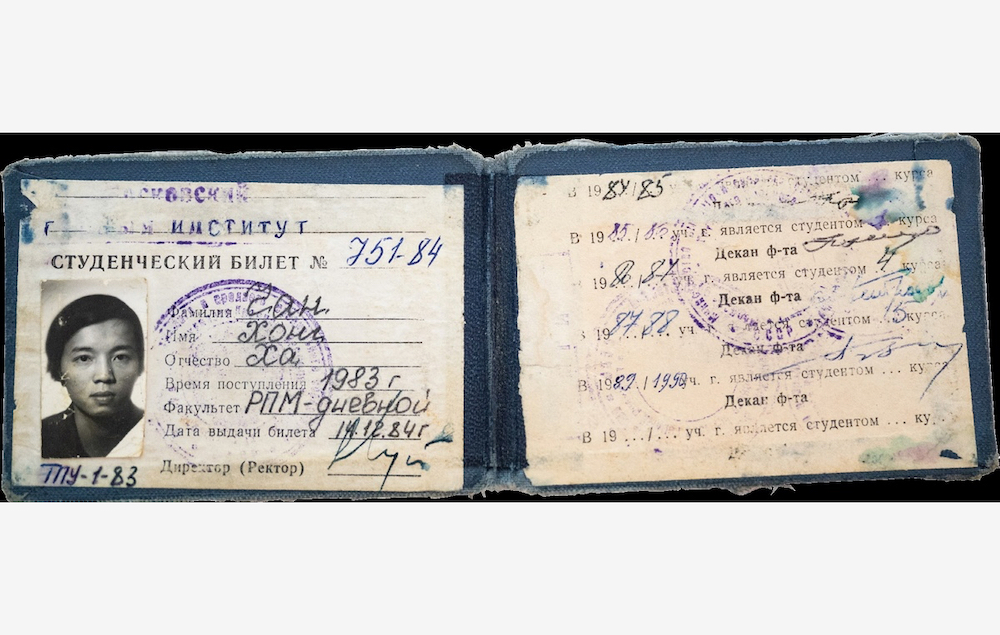
His graduation thesis, devoted to the technical and economic justification for selecting a coal mine development system, was supervised by Professor Sergey Yarunin, Doctor of Technical Sciences, Dean of the Faculty of Underground Mining Development, and a laureate of the USSR Council of Ministers Prize.
During his postgraduate studies at the Moscow Mining Institute, Tran Hong Ha prepared and defended a Ph.D. dissertation on forecasting the parameters of technological schemes for coal mines in Vietnam. His academic supervisor was Professor Yuri Kuznetsov, founder of the scientific school of high-productivity coal mine design.
After completing his studies, from 1992 to 1996 Tran Hong Ha worked as a research fellow at the Сenter for the support of electronic information technology development “Antei” in Moscow. In 1996, he returned to Vietnam, where he built a career in the Ministry of Natural Resources and Environment. He advanced from a specialist in the department of environmental protection to minister of natural resources and environment (appointed in 2016). In parallel, he pursued a party career and has held senior positions within the Central Committee of the Communist Party of Vietnam since 2011. Сurrently he is a member of its 13th Central Committee.
January 2023, Tran Hong Ha was appointed Deputy Prime Minister of Vietnam. In this role, he oversees industry, energy, transport, construction, natural resources, agriculture, environmental protection and climate change, maritime economy, housing policy, and public procurement policy.
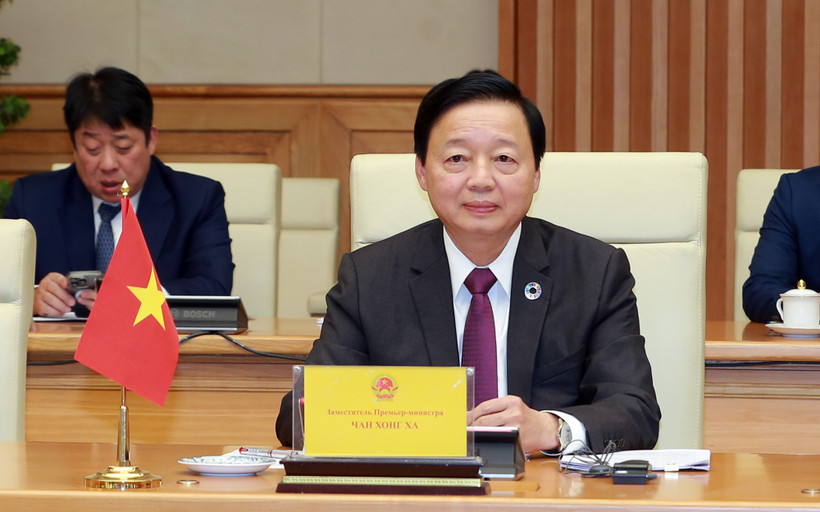
He also serves as Co-Chair of the Russia—Vietnam Intergovernmental Commission on trade, economic, scientific, and technical cooperation. The Russian Co-Chair is Dmitry Chernyshenko, Deputy Prime Minister of the Russian Federation. In this capacity, Tran Hong Ha actively contributes to the development of relations between Vietnam and Russia. In September 2024, during an official visit to Russia, he visited his alma mater — NUST MISIS.
“Soviet educational institutions trained tens of thousands of Vietnamese scientists and engineers who laid a solid scientific and technological foundation. This is an invaluable asset that serves as a red thread connecting our two nations”.
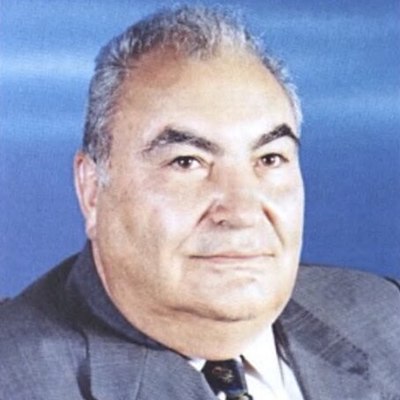
Rahim Huseynov
Former Prime Minister of Azerbaijan
Years of Study:
Specialization: Metallurgical Engineer
Soviet and Azerbaijani economic and statesman. He served as Chairman of the State Planning Committee of Azerbaijan, Deputy Chairman of the Council of Ministers of the Azerbaijan SSR, and Prime Minister of Azerbaijan.
Rahim Aliguseyn oglu Huseynov
After returning to Azerbaijan, Huseynov began his professional career at the Azerbaijan Pipe Rolling Plant. From 1959 to 1962, he advanced from assistant foreman to head of the pipe-rolling shop and chief technologist, gaining extensive hands-on experience in industrial production management.
From 1962 onward, his career was associated with the state planning system. Between 1962 and 1965, he worked as chief specialist and head of a department at the State Planning Committee of the Azerbaijan SSR. He later held senior positions in the system of material and technical supply under the Council of Ministers of the republic, including Chairman of the Republican State Committee for Material and Technical Supply
From 1989 to 1992, Rahim Huseynov headed the State Planning Committee of Azerbaijan while simultaneously serving as Deputy Chairman of the Council of Ministers of the Azerbaijan SSR. In May 1992, he was elected Prime Minister of the Republic of Azerbaijan. He held this post until January 1993, after which he voluntarily resigned.
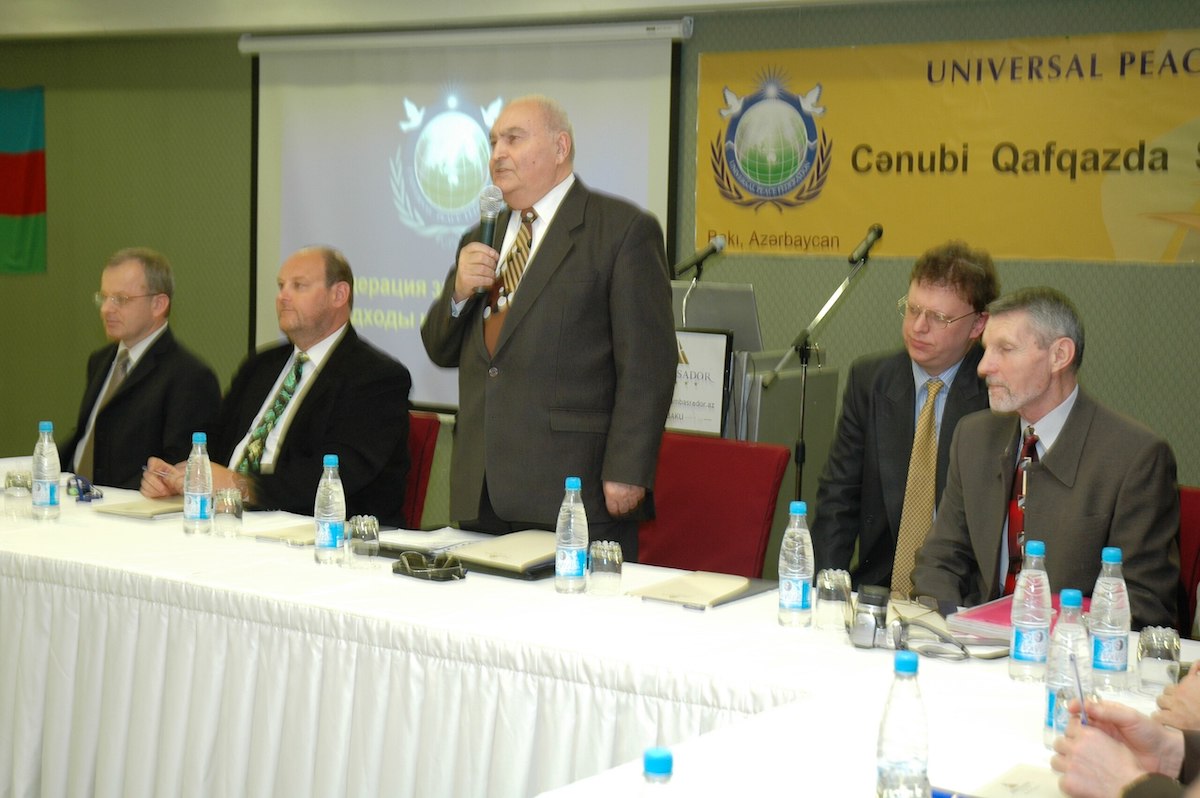
In addition to public service, Rahim Huseynov was actively involved in public and scientific-technical activities. From 1990, he chaired the Union of Scientists and Engineers of Azerbaijan, and from 1994 served as President of the International Khazar Foundation and Vice President of the International Union of Scientists and Engineers.
He was awarded the Orders of the Red Banner of Labor, Friendship of Peoples, Badge of Honor, as well as several medals.
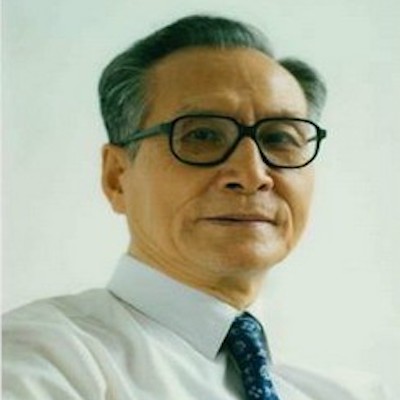
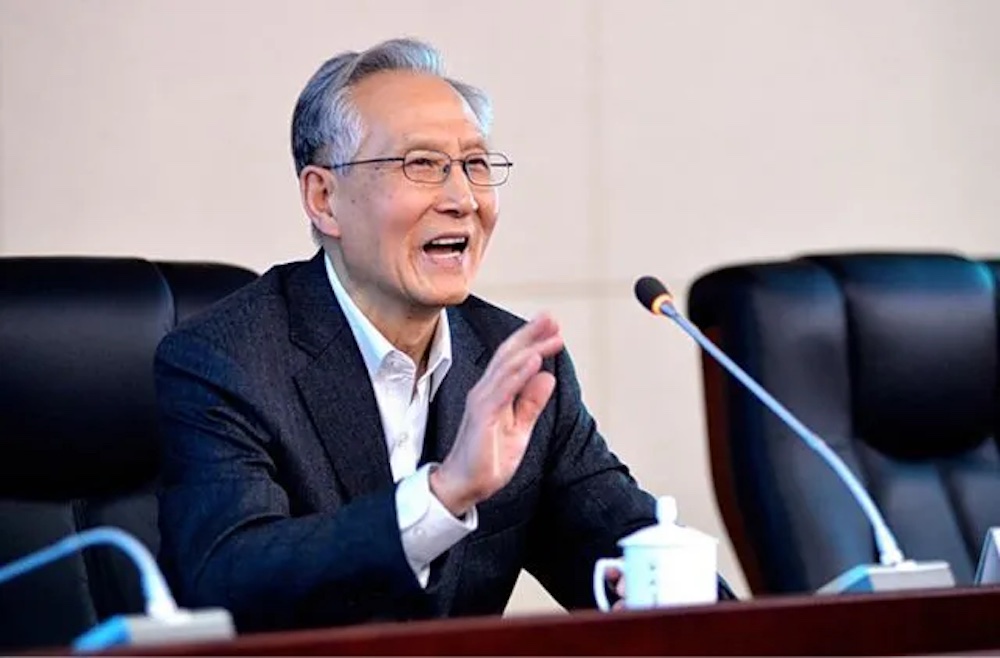
Zhou Yaohe
Chinese Materials Scientist
Years of Study:
Specialization: Metallurgy, Ph.D. in Engineering
Renowned physical metallurgist and pioneer of solidification science in China. Academician of the Chinese Academy of Sciences.
Zhou Yaohe
From 1954 to 1957, he studied at the Moscow Institute of Steel named after I. V. Stalin (the name of NUST MISIS from 1930 to 1962), where he earned the degree of Ph.D. of Technical Sciences. Upon returning to China, Zhou Yaohe played a key role in establishing the Chinese school of foundry engineering: he led the creation of the Foundry Department at Northwestern Polytechnical University in Xi’an and became its first head.
Over subsequent decades, Zhou Yaohe devoted his scientific career to the study of metal solidification processes and casting technology. In the 1980s, he participated in the establishment of the State Key Laboratory of Solidification Processing. His research laid the foundations for the theory of forced crystallization, ingot segregation, and non-equilibrium solidification.
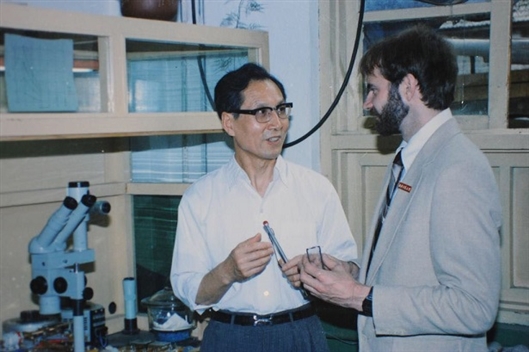
In 1991, Zhou Yaohe was elected an Academician of the Chinese Academy of Sciences. From 1996, he served as a professor at the School of Materials Science and Engineering at Shanghai Jiao Tong University (#47 in the QS World University Rankings), where in his later years he focused on research into environmentally friendly materials.
Over the course of his career, Zhou Yaohe published more than 500 scientific papers, supervised dozens of Ph.D. and doctoral students, and received numerous national and industry awards. He became the first academician in China specializing in foundry engineering and the first Chinese president of the World Foundry Organization.
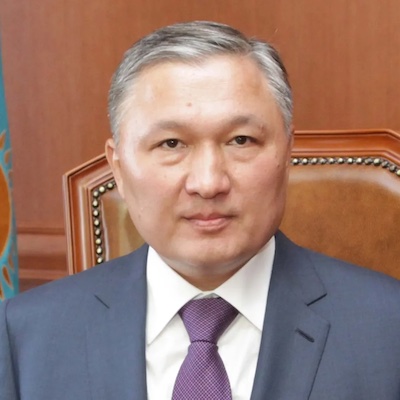
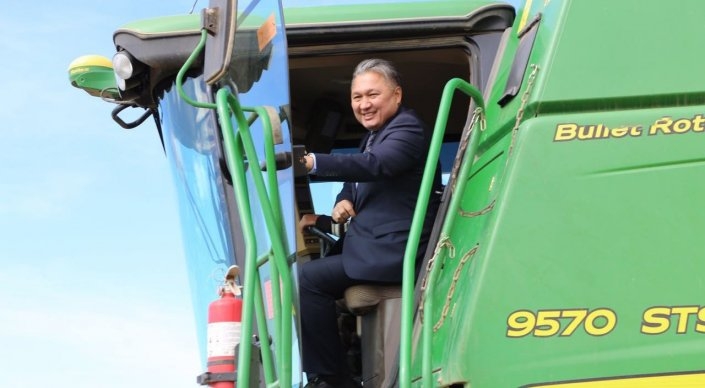
Nurmukhambet Abdibekov
Former Chairman of the Supreme Audit Chamber of Kazakhstan
Years of Study:
Spesialization: Ph.D. in Engineering; Technology and Integrated Mechanization of Open-Pit Mining of Mineral Deposits; Mining Engineer (Moscow Mining Institute)
Kazakhstani public official, politician, and businessman. He served as Vice Minister of Industry and New Technologies of Kazakhstan, Akim (Governor) of Karaganda Region, and Chairman of the Accounts Committee for Control over Execution of the Republican Budget (now the Supreme Audit Chamber of Kazakhstan). Academician of the World Academy of Mining Sciences; Academician and Vice President of the Kazakhstan National Academy of Mining Sciences.
Nurmukhambet Abdibekov (born 1961) was born in the city of Arkalyk, Kazakhstan. From 1979 to 1984, he studied at the Moscow Mining Institute (now the College of Mining of NUST MISIS).
He began his professional career in 1984 at the Chilisai phosphorite mine in Aktobe Region, where he worked as shift foreman, section head, and mine supervisor. In the 1990s, he combined practical work with scientific and managerial activities, serving as a senior research fellow at the National Academy of Sciences of Kazakhstan and later holding senior positions in commercial and regional organizations. In 1993, he defended his Ph.D. dissertation at the Moscow State Mining University entitled “Substantiation of Internal Dumping Technology in the Development of Steeply Dipping and Inclined Coal Deposits of the Kuzbass Region”.
From the late 1990s, Nurmukhambet Abdibekov worked in regional and national public administration, heading economic and industrial divisions in Aktobe and Atyrau Regions. In
From 2011 to 2014, he served as Akim of the city of Aktobe and First Deputy Akim of Aktobe Region. From 2014 to 2017, he held the position of Akim of Karaganda Region (equivalent to governor).
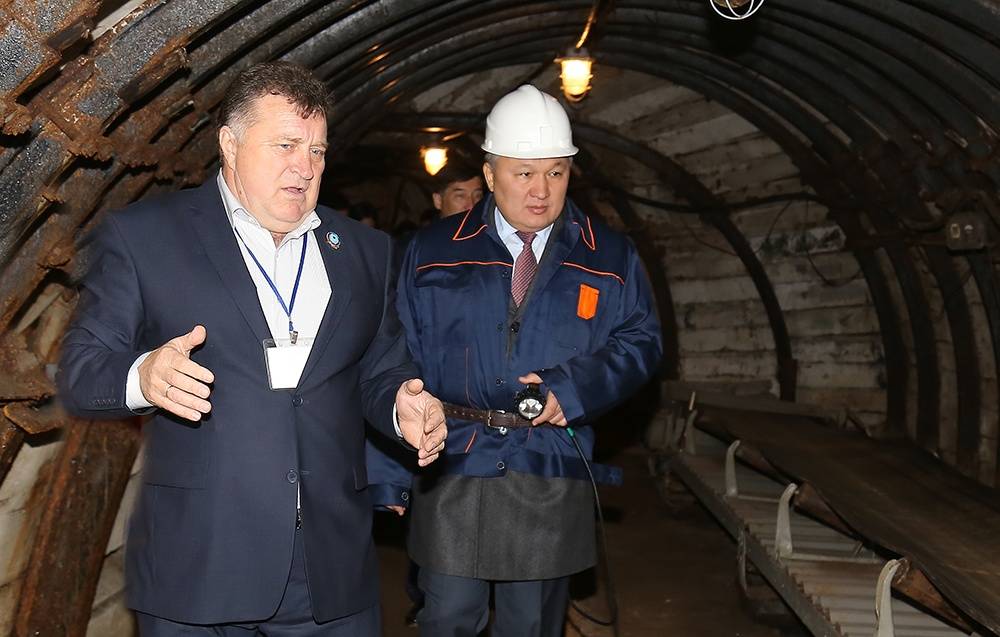
Between 2017 and 2018, Nurmukhambet Abdibekov chaired the Accounts Committee for Control over Execution of the Republican Budget of Kazakhstan (now the Supreme Audit Chamber).
From 2019 to 2025, he headed a department of the National Center for Integrated Processing of Mineral Resources of Kazakhstan. Since 2024, he has been a member of the Board of Directors of Kazakhstan Engineering, a national holding company under the Ministry of Defense of Kazakhstan that unites major defense enterprises and oversees their production and technological policy.
He is an Academician of the World Academy of Mining Sciences, as well as an Academician and Vice President of the Kazakh National Academy of Mining Sciences.