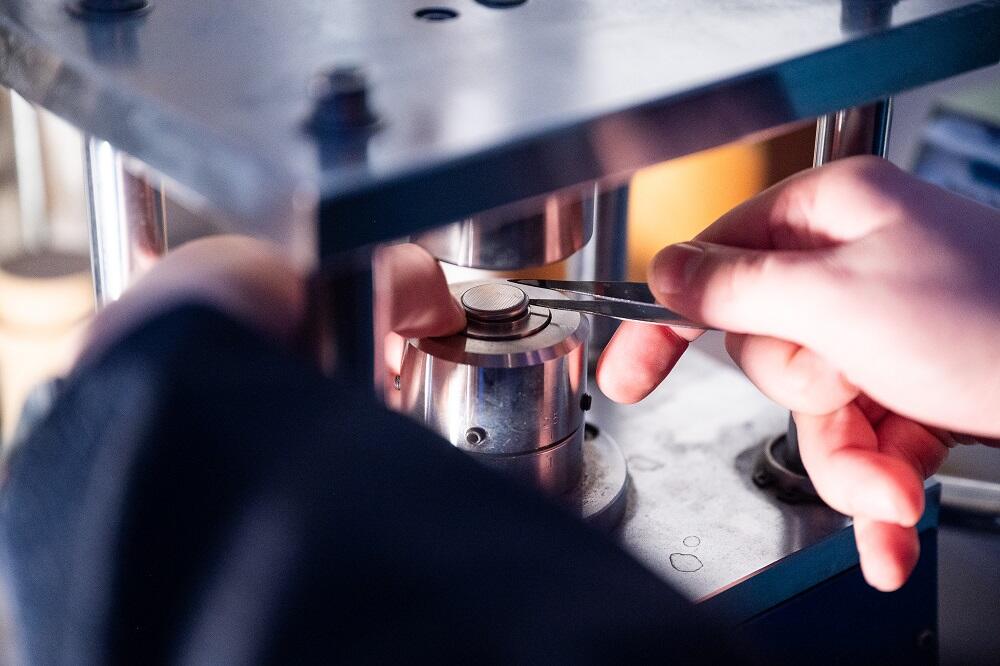
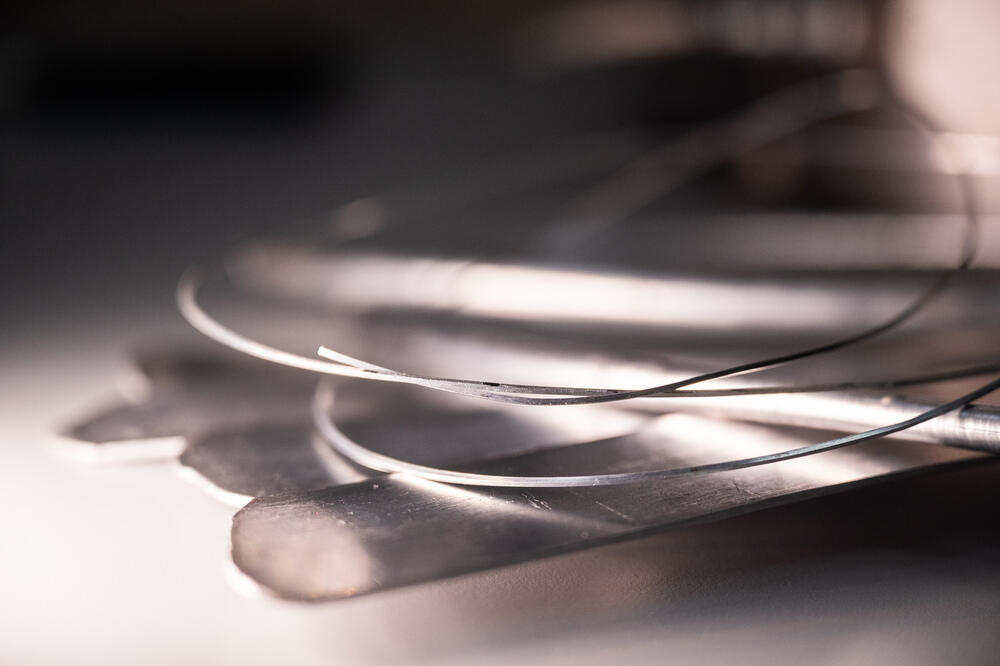
Researchers at MISIS University have developed a new aluminum alloy alloyed with calcium and titanium that demonstrates enhanced heat resistance and wear resistance.
A specialized laboratory established by RED SOFT, one of Russia’s leading software developers, has opened at the College of Computer Science at NUST MISIS. The new training space provides all the necessary infrastructure to prepare system administrators, engineers, database administrators, and IT infrastructure architects who will go on to work with domestic infrastructure software in the industrial sector, including metallurgy and related industries.
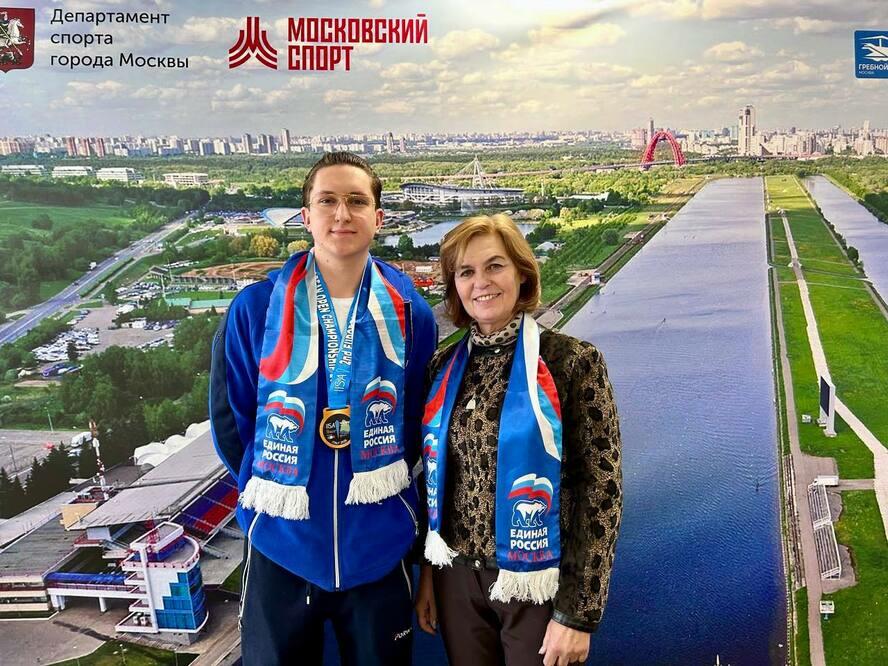
Matvey Ovseychuk, a fourth-year student at the College of Technologies of NUST MISIS, became the European champion in ice swimming as a member of the national team and won medals in individual events. More than 500 athletes from 32 countries competed for the title. The Russian team emerged as the overall leader, winning 54 medals and setting four world records.
Researchers from NUST MISIS, HSE University, and the Russian company QRate have introduced a new approach to predicting quantum error rates in quantum key distribution systems using machine learning algorithms.
Students of MISIS delivered an outstanding performance at the Northern Eurasia Championship of the International Collegiate Programming Contest (ICPC), one of the most prestigious competitions in competitive programming worldwide. The teams demonstrated strong results, reaffirming the university’s solid reputation in training specialists in algorithmic programming.
NUST MISIS took part in the international Education and Careers Expo 2026, held in Hong Kong with the support of the Consulate General of the Russian Federation. The exhibition was organized by the Hong Kong Trade Development Council under the auspices of the Government of the Hong Kong Special Administrative Region and is the largest education forum in the Greater Bay Area. This year, around 800 educational institutions from 20 countries participated in the event.
Physicists from the National University of Science and Technology MISIS and the Russian Quantum Center (RQC) have systematized modern approaches to implementing quantum algorithms using multidimensional quantum systems—qudits—and demonstrated how engaging additional energy levels of quantum carriers can simplify the execution of complex quantum operations and reduce their number compared to standard qubit-based schemes. Such approaches can improve the efficiency of quantum computing and bring the practical application of quantum algorithms closer in areas such as optimization, data processing, and the modeling of complex systems.
Scientists at University of Science and Technology MISIS patented a technology that makes it possible to recover rare refractory metals widely used in industry from spent petrochemical catalysts. The recovery rate reaches 95% for tungsten and up to 92% for molybdenum. The new technology has been implemented at the Unecha Hard Alloys Plant.
According to data from Scopus, the world’s largest database of scientific publications, in 2025 researchers from NUST MISIS published 890 papers. Two of these were featured in journals ranked among the top 1% worldwide by CiteScore: Reviews of Modern Physics and ACS Nano.
NUST MISIS students became prize winners at an IT hackathon held as part of the Impulse T1 conference. Team MISIS MOJARUNG took first place and won 300,000 rubles, YSL MISIS finished second with a 200,000-ruble prize, and larek.tech placed third, earning 100,000 rubles.
Students of the College of Computer Sciences at NUST MISIS, together with peers from other universities, became prize winners in two IT competitions. They took second place at the Wink AI Challenge hackathon, winning 120,000 rubles, as well as second and third places at the interdisciplinary hackathon Theatre. AI. Human. The teams presented applied artificial intelligence solutions for the film industry and theatre arts.
NUST MISIS Vice-Rector for Academic Affairs Andrey Voronin and Gao Xiukun, Director of Secondary School No. 1 of the Ordos Urban District (PRC), have signed an agreement to establish a preparatory center in the Inner Mongolia Autonomous Region. The event marks a new chapter in training highly qualified professionals for one of China’s key industrial regions and strengthens academic cooperation between the two countries.
Researchers at NUST MISIS have introduced a gel based on the enzyme dextranase that can effectively combat dental plaque and help prevent tooth decay. In the future, the development could improve the formulation of toothpastes and serve as a foundation for new preventive dental care products.
The final stage of the StudRussia competition, one of the key projects bringing together talented international students studying at Russian universities, was held at University of Science and Technology MISIS. The event gathered 112 participants from 76 universities across Russia, representing 22 countries. The Grand Prix and the Best International Student title were awarded to two students. In the Russian-language track, the winner was Darya Gosteva (Kazakhstan), representing St. Petersburg State University of Industrial Technologies and Design. In the English-language track, the winner was Gazal Rana (India), a student of Petrozavodsk State University.
In the international sustainability ranking UI GreenMetric, NUST MISIS ranked 33rd in Russia and 1156th globally. This ranking, compiled annually by the University of Indonesia since 2010, includes 1,745 universities from 105 countries around the world.
NUST MISIS hosted the Russia—China Education Festival, a platform for open dialogue and the exchange of best practices among universities, research centers and cultural institutions of both countries. During plenary sessions, panel discussions and master classes, participants discussed current areas of cooperation and strengthened humanitarian ties in education, science and culture.
Researchers at NUST MISIS have discovered the most effective method of processing an aluminum alloy, which allows the material to become three times stronger while maintaining optimal hardness and ductility. In the future, this approach could enable manufacturers to eliminate costly alloying additives, producing lightweight and durable components for microelectromechanical systems (MEMS) that retain their properties through multiple work cycles.
Russian scientists have introduced an ultra-sensitive detector capable of detecting individual photons with an efficiency of up to 98%. This development could serve as a foundation for the advancement of quantum computing, secure data transmission, and applications in astronomy and biomedical diagnostics.
We use cookies and metrics. By continuing to use the website, you confirm that you have read in a whole and agree with the Personal Data and Cookies Processing Policy.