Researchers at NUST MISIS have identified an improved alloy composition and processing method for the more cost-effective and efficient production of permanent magnets used in energy, electrical engineering, and transportation systems.
One of the promising candidates as an alternative to rare-earth magnets in a number of applications is a manganese-aluminum-based alloy. Its magnetic properties are associated with the so-called τ-phase. However, this phase is unstable and can easily degrade when temperature or processing conditions change.
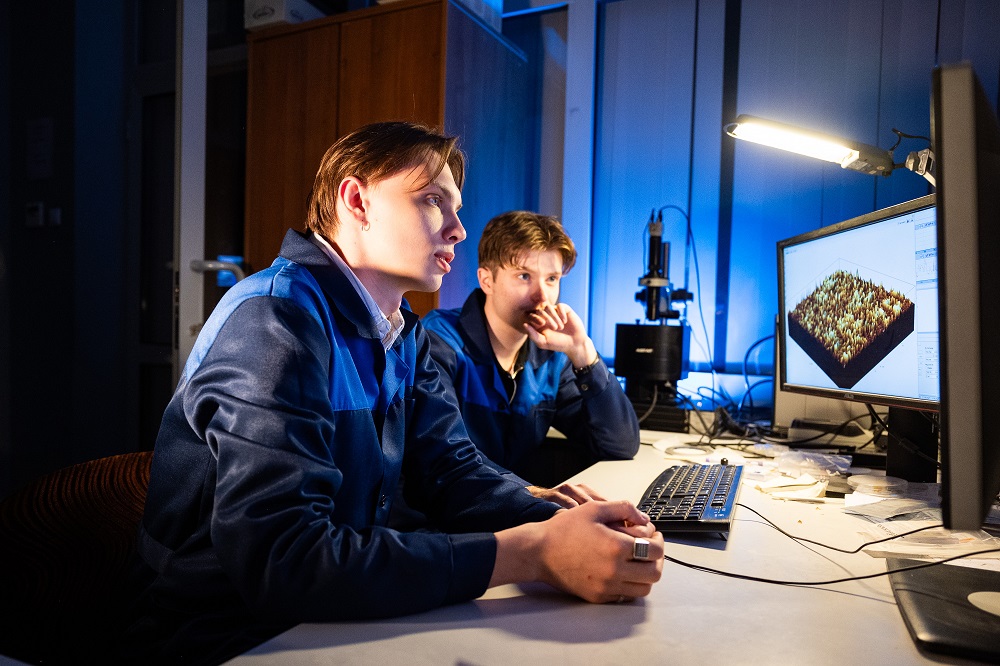
Scientists at NUST MISIS investigated how adding small amounts of vanadium and applying different cooling methods — from conventional quenching to ultrafast melt spinning on a rotating copper wheel — affect the behavior of such alloys. The study examined alloys with manganese content ranging from 51% to 55%.
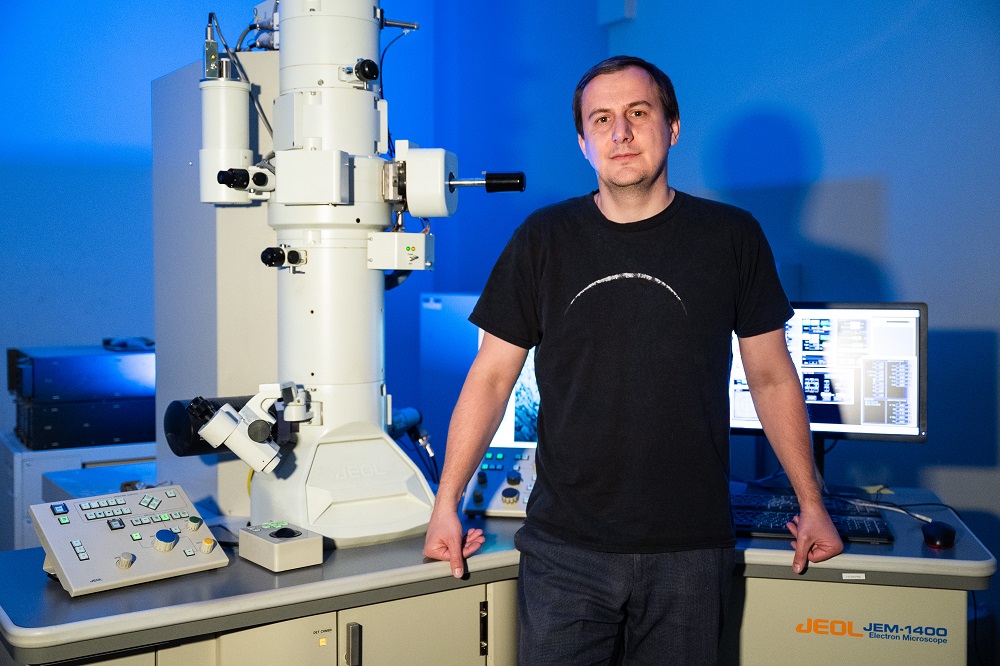
“Composition and cooling conditions make it possible to control the material’s structure more precisely. We found that adding vanadium makes the magnetic τ-phase less stable: it forms within a narrower composition range and decomposes at lower temperatures. However, under ultrafast quenching conditions, vanadium helps obtain this phase without additional heat treatment,” said Mikhail Gorshenkov, Candidate of Technical Sciences, Associate Professor of the Department of Physical Materials Science and Leading Researcher at the Center for Infrastructure Cooperation and Partnership “MegaScience”.
The best result was achieved for a manganese-aluminum-vanadium alloy (Mn₅₃Al₄₄V₃). In the cast sample after quenching and annealing, the fraction of the magnetic phase exceeded 90%. In thin metallic ribbons produced by ultrafast cooling, a high proportion of this phase formed without additional heat treatment, which could simplify the technology for producing the required ferromagnetic phase with a fine grain structure. The researchers also observed a slight increase in the magnetization of the ferromagnetic phase.
“Another interesting result was the discovery of Curie temperature hysteresis: the temperature of the ferromagnetic-to-paramagnetic phase transition during heating was found to be more than 100 °C higher than during cooling. At the same time, no changes in the crystal structure of the material were observed. This effect is unusual for most ferromagnets and had not previously been observed in the alloys we study. We assume that the observed phenomenon may be related to a first-order magnetic phase transition mechanism. We are currently investigating this effect, as it could be useful for the development of various sensors,” said Anastasia Fortuna, Assistant at the Department of Physical Materials Science, NUST MISIS.
The detailed results were published in Journal of Magnetism and Magnetic Materials (Q2). The study was supported by the Russian Science Foundation under project No.