Researchers at NUST MISIS have developed an artificial intelligence algorithm that detects plant diseases from photographs of leaves while performing more reliably under varying lighting conditions, backgrounds, and image geometry.
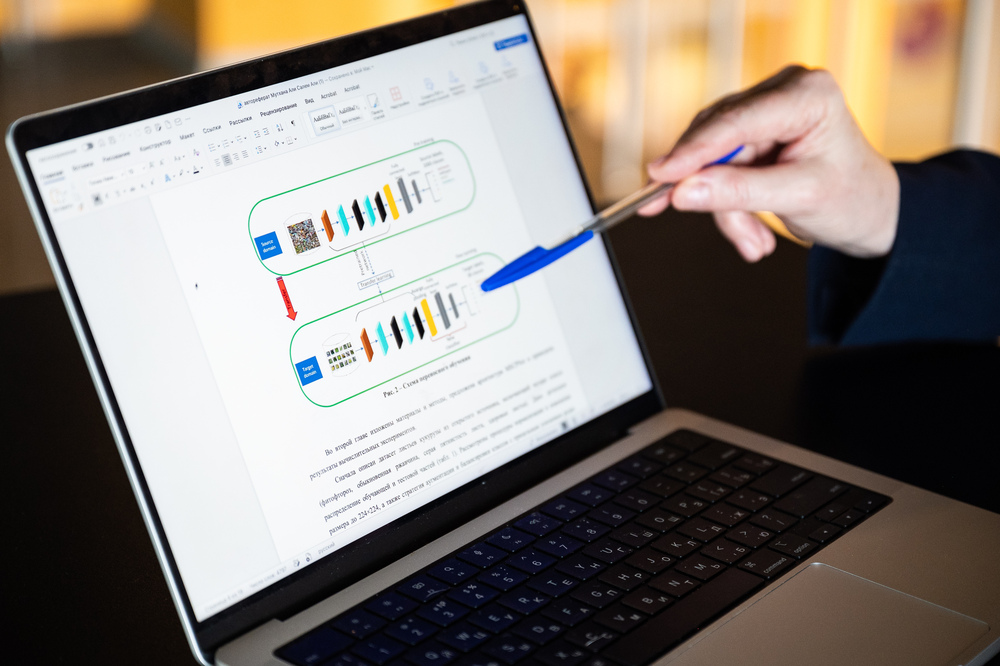


Early detection of plant diseases is one of the key challenges in agriculture. In practice, leaf photographs are often taken directly in the field, where image quality is affected by lighting, weather conditions, and the surrounding environment. As a result, even state-of-the-art computer vision systems can produce inaccurate results. Researchers at NUST MISIS have proposed a new approach to improve the reliability of these systems. Their solution is based on the HiP²-Net neural network architecture, which enables the algorithm to account for the specific characteristics of individual crop species.
“At NUST MISIS, we embrace the global trend toward the widespread adoption of artificial intelligence across diverse sectors of the economy. Under the leadership of Evgeny Korzhov, PhD in Engineering and Head of the Department of Computer-Aided Design, our researchers have developed a new neural network—based algorithm that analyzes leaf images while simultaneously identifying the plant species, detecting disease symptoms, and determining the type of disease. Looking ahead, this technology could serve as the foundation for mobile applications and digital services for the agricultural sector, enabling faster detection of crop diseases and helping reduce yield losses,” said rector of NUST MISIS Alevtina Chernikova.
To train the system, the researchers employed data augmentation, applying additional image transformations, including the simulation of small disease lesions on leaves. This approach enables the algorithm to recognize subtle and early-stage disease symptoms that are often difficult to detect in the initial phases of infection.
“The algorithm also incorporates information about the image’s ’greenness,’ allowing it to better distinguish leaf tissue while minimizing the effects of shadows, glare, and distracting background elements. This is particularly important for adapting such systems to real-world imaging conditions,” Ali Salem Muthana, postgraduate researcher at the Department of Computer-Aided Design at NUST MISIS.
The newly developed model achieved higher accuracy than the baseline neural network model: the proportion of correctly identified cases increased from 87.5% to more than 93% on the experimental dataset. The system was better at detecting mild disease symptoms, proved less sensitive to variations in background and lighting, and interpretation maps showed that the model focused on biologically meaningful features such as leaf veins, spots, and damaged tissue. The full results have been published in the scientific journal Discrete and Continuous Models and Applied Computational Science.
“When making predictions, the model focuses on the characteristic features of plant diseases—such as leaf veins, spots, and damaged areas—rather than on incidental elements in the image. In the future, this technology could be integrated into mobile applications for farmers, cloud-based crop monitoring platforms, and digital agriculture systems,” Elena Lyapuntsova, EngD, professor in the Department of Computer-Aided Design at NUST MISIS.
The research team plans to expand the database of crop species and diseases and further adapt the technology to work with photographs captured directly in field conditions, including natural lighting, complex backgrounds, and varying image quality.