Researchers at NUST MISIS have presented a mathematical method that makes it possible to assess in advance how reliably artificial intelligence can use knowledge acquired while solving one task to perform another. The development is based on a new theorem that makes it possible to formally prove under which conditions knowledge transfer between machine learning models will be reliable.
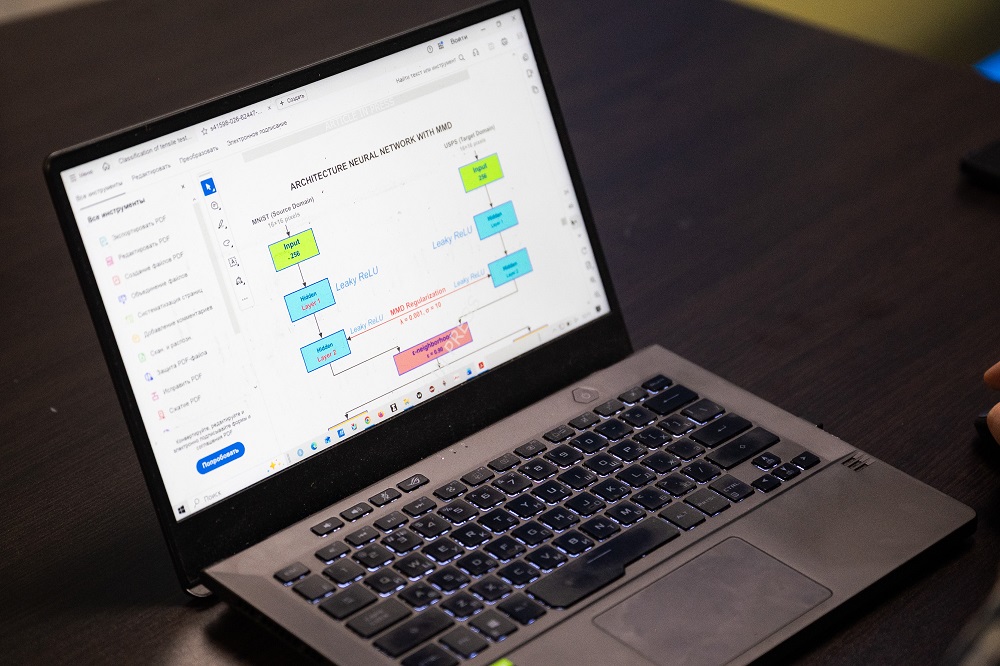
Modern artificial intelligence systems are rarely trained “from scratch.” Much more often, a model is first trained to perform one task, and the knowledge it has acquired is then used to solve another. This transfer can significantly reduce training time and the amount of data required. However, it is often impossible to determine in advance whether a model will retain its accuracy after such a transition.
A NUST MISIS researcher has proposed a mathematical solution to this problem. He developed a theorem that describes the conditions under which knowledge can be reliably transferred between machine learning models. Unlike traditional methods based primarily on experimental testing, the new approach makes it possible to obtain a formal mathematical proof that the transfer will be correct.
The work is based on mathematical logic, a framework widely used to verify the correctness of complex computer systems. The researcher adapted it to artificial intelligence tasks by linking the knowledge transfer process to Hoare logic, one of the best-known methods of formal program verification. This makes it possible not only to evaluate model performance experimentally, but also to prove the conditions under which the model will retain its properties after being trained on new data.
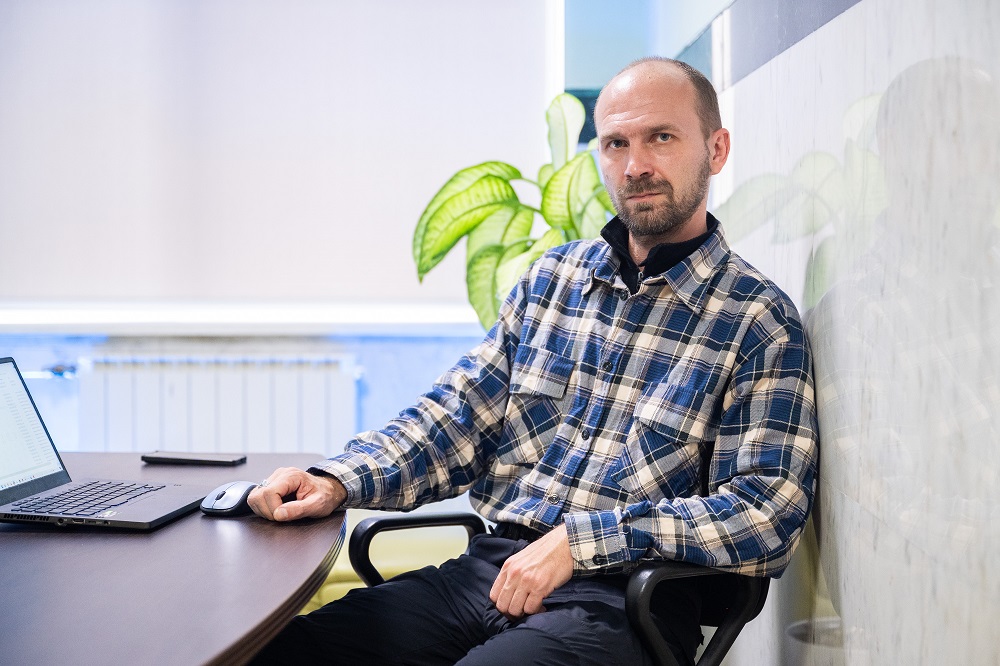
“The proposed mathematical framework could serve as a foundation for developing more reliable AI systems, particularly in areas where errors are unacceptable, such as medicine, industry, robotics, and autonomous transportation. In the future, the method could be used to verify algorithms before they are deployed in real-world systems, making artificial intelligence technologies more predictable and safer,” said Nikita Yuryevich Nikitin, a researcher at the College of New Materials at NUST MISIS.
Detailed results of the study have been published in the journal Scientific Reports (Q1). The research was supported by a grant from the Russian Science Foundation (Project No.