Scientists at NUST MISIS have developed a system that will make it possible to inspect industrial equipment at oil refineries without interrupting production. The system is based on muography, a non-invasive method for determining the internal structure of objects by measuring the attenuation of a natural muon flux using detectors.

Muons are elementary particles produced in the upper layers of Earth’s atmosphere through interactions with cosmic rays. They can travel through substantial thicknesses of matter. The density of a material affects the proportion of muons that pass through an object: the denser a section is, the more strongly it attenuates the particle flux. By detecting muons, researchers can obtain information about the internal structure of various objects. Scientists at NUST MISIS propose applying this principle to diagnose distillation columns — large industrial installations used to separate crude oil into individual fractions. Unlike conventional gamma scanning of distillation columns, muography requires neither radioactive sources nor production shutdowns.
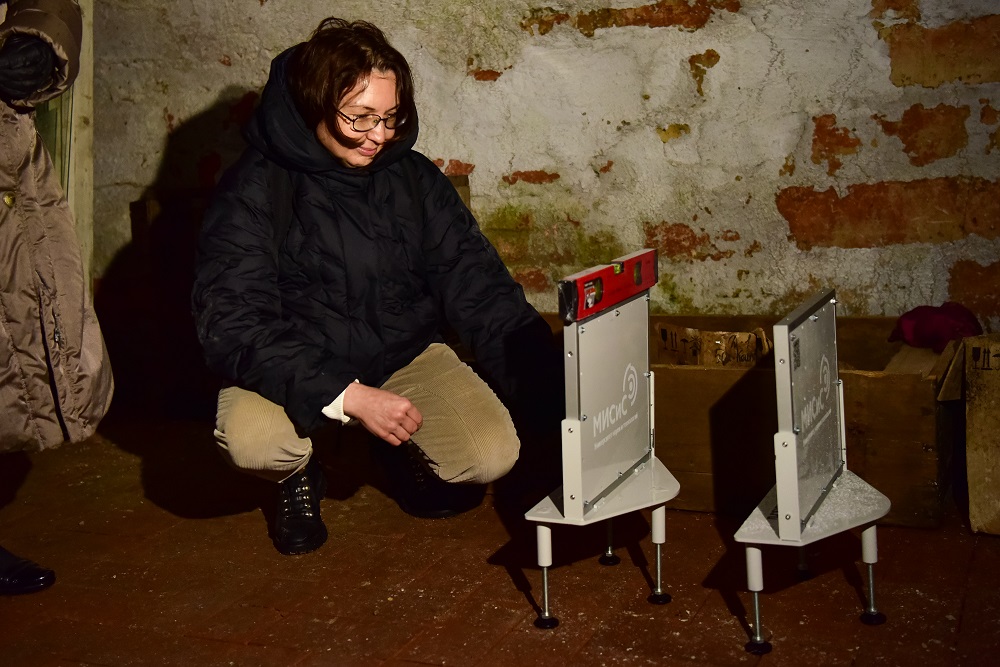
“To inspect equipment using muography, we install autonomous detectors on the outside of the columns. These detectors consist of nuclear emulsion plates. During the exposure period, the detectors record muons passing through the equipment. The plates are then developed and scanned, and the resulting data are processed using specialized software. By analyzing the distribution of detected particles, we can reconstruct the object’s internal structure and assess the condition of the column’s internal contact devices,” said Natalia Polukhina, Doctor of Physics and Mathematics and Lead Expert at the MegaScience Infrastructure Collaboration and Partnership Center at NUST MISIS.
The researchers have developed the detector design, measurement procedures, and software tools for processing the collected data. At the next stage, the team plans to create a complete solution for the regular monitoring of industrial equipment and launch a diagnostic service for oil refineries based on this technology. The service will cover measurements, data processing, and the preparation of assessment reports. Client-facing software is also being developed to enable customers to submit requests, track inspection work, and maintain records of previous measurements.
“Emulsion detectors require neither an external power supply nor an artificial radiation source, and all components of the detector system are manufactured in Russia. Once a sufficient volume of data has been collected and processed, the customer receives the inspection results and a diagnostic report. Muography can help identify signs of stagnant zones and mechanical defects in distillation columns. This information can be used by a facility’s technical teams to assess equipment condition and determine whether maintenance or repairs are needed,” said Yulia Krasilnikova, project lead and Head of the Research Administration at NUST MISIS.
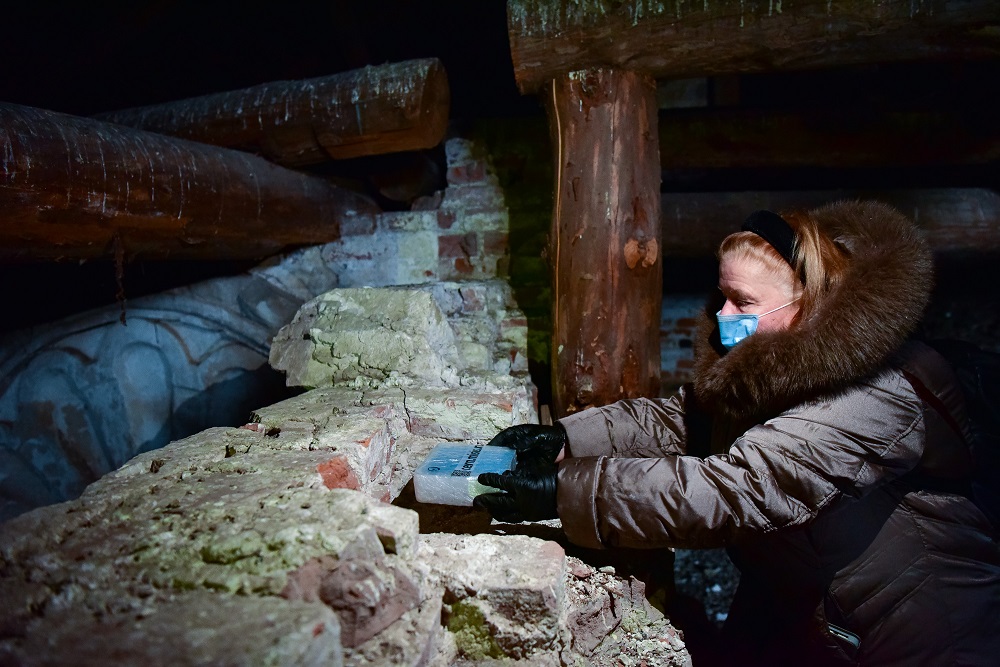
The proprietary technology builds on years of research by specialists from NUST MISIS and the P. N. Lebedev Physical Institute of the Russian Academy of Sciences (LPI RAS). Previously, the researchers used muography to study cultural heritage sites, investigate the internal structure of large industrial facilities, and address challenges in petroleum geology. In 2025, a joint team from NUST MISIS and LPI RAS, working with specialists from Tatneft, delineated a section of a bituminous sandstone deposit in the Republic of Tatarstan. The experience gained provided a foundation for further adapting the method to industrial equipment. Applying the technology at the operating Moscow Oil Refinery marked one of the team’s first projects at industrial facilities.