Russian researchers have discovered that laser 3D-printing parameters can directly influence the properties of a nickel—titanium shape memory alloy. The scientists demonstrated that by adjusting laser power and scanning speed, it is possible to “program” the material’s behavior in advance, including the temperature at which it recovers its shape and the degree of its elasticity. The findings open new opportunities for the development of advanced medical implants, miniature actuators, and components for 4D printing.
Nickel—titanium alloy is notoriously difficult to machine, and manufacturing components from it typically requires numerous additional processing steps. As a result, increasing attention is being paid to additive manufacturing technologies, particularly laser-based 3D printing using metal powders.
Researchers from NUST MISIS and the P. N. Lebedev Physical Institute of the Russian Academy of Sciences investigated how laser-printing parameters affect the properties of nickel—titanium alloy. To do this, they produced thin-walled specimens using the Laser Powder Bed Fusion (LPBF) process, in which a laser selectively melts metal powder layer by layer. The team varied laser power and scanning speed to determine how these parameters influence the material’s structure and functional behavior.
“For several decades, NUST MISIS has been advancing research in shape memory alloys. The materials and technologies developed by our scientists are now widely used across various sectors of Russian industry and have been successfully implemented in production. In this study, NUST MISIS researchers examined how 3D-printing parameters affect the properties of a nickel—titanium-based alloy. Owing to its unique combination of strength, flexibility, and ability to return to its original shape, this material is widely used in medicine, aerospace engineering, robotics, and microelectronics. It is the alloy used, for example, in vascular stents, orthodontic archwires, and certain types of implants. The results of this research pave the way for the development of improved medical devices, miniature actuators, and components for 4D printing,” said Alevtina Chernikova, Rector of NUST MISIS.
The study also showed that under less intensive printing conditions the alloy retains high superelasticity, which is the ability to undergo deformation and fully recover without damage. Under more intense laser exposure, the material exhibits a stronger shape memory effect.
This approach is particularly important for 4D printing, an emerging field in which printed objects can change their shape or properties over time in response to temperature, mechanical load, or other external stimuli. The ability to predetermine material behavior opens the door to a new generation of smart structures.
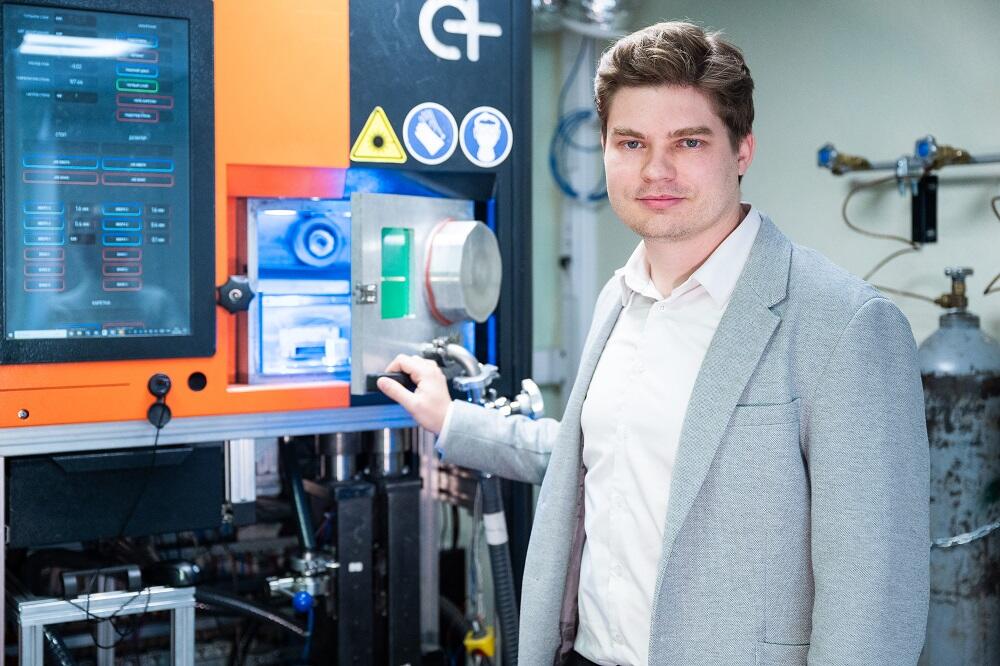
“The key outcome of this work is the confirmation that the alloy’s properties can be tuned directly during the printing process, without additional heat treatment. We found that changing the printing parameters can shift the phase transformation temperature by nearly 45°C. In other words, we gained the ability to control the point at which the material begins to recover its shape or display superelasticity,” said PhD Stanislav Chernyshikhin, Head of the Laboratory of Additive Manufacturing at NUST MISIS.
The findings may prove valuable for the production of personalized medical implants, miniature mechanisms, flexible joints, and robotic devices. In addition, the study could serve as a foundation for developing industrial printing protocols for nickel—titanium alloys with predefined characteristics tailored to specific applications and operating conditions.
The research findings were published in the scientific journal Journal of Manufacturing and Materials Processing (Q1). The study was supported by the Russian Science Foundation (Project No.