Open Doors: Russian Scholarship Project is your chance for an early admission to a tuition-free study program at one of the leading universities in Russia.
If you are a young and ambitious PhD holder, this is your chance to get a postdoc position at one of the leading universities in Russia.

The Open Doors offers limitless opportunities for education, self-development, and new academic career prospects in Russia for young talented individuals from around the globe.
The Open Doors has been held annually since 2017. It is organized by the Association of Global Universities, a consortium of leading Russian universities, and is supported by the Ministry of Science and Higher Education of the Russian Federation and Rossotrudnichestvo.
Each year, over a 150 thousand talented and motivated young people from many countries participate in the Open Doors. The competition covers 14 interdisciplinary Subjects, ranging from engineering and medicine to economics and linguistics, with tracks available for bachelor’s, master’s, PhD, and postdoctoral candidates. Participation in the Open Doors is free of charge and the competition is held online. The working languages of the Open Doors are English and Russian.
Winning the Open Doors gives admission to bachelor’s, master’s, or PhD programs, or secures a postdoc position in research projects at one of Russia’s leading universities through a streamlined, one-stop process. Over the years, the project has gained broad international recognition, attracting more than 618,000 participants from over 200 countries. More than 16,700 participants have become winners and runners-up.
Download Brochure (2.2 MB)
What are the benefits for the winners of the bachelor’s, master’s or PhD tracks?
- Free tuition for the chosen study program, taught in English or Russian. Students who have selected a degree program taught in Russian are entitled to a year of complimentary Russian language training;
- The opportunity to choose a university and degree program through a streamlined, one-stop system;
- An engaging student life experience and vibrant campus environment;
- Ongoing support and assistance provided at every stage of the academic journey;
- Those who choose a Russian-taught degree program may be considered for Russian Government grant support. The grant support includes coverage of travel expenses to the place of study and the return travel upon completion of studies in Russia, a monthly allowance subject to maintaining good or excellent academic standing, coverage of voluntary health insurance costs, and reimbursement of accommodation expenses during the period of study.
What are the benefits for the winners of the postdoctoral track?
- A postdoc position in a research project at one of Russia’s universities;
- The opportunity to choose a university research project through a streamlined one-stop system;
- The opportunity to work under the guidance of world-renowned scientists, using state-of-the-art research equipment;
- Continuous support at every stage of their research work.
There are two stages in the bachelor’s and master’s tracks:
The first stage is a portfolio review and an entrance test. The second stage is a completion of the Open Doors tasks.
There are three stages in the doctoral (PhD) and postdoctoral tracks:
The first stage for both tracks is a portfolio review and an entrance test.
The second stage for the PhD track is a completion of the Open Doors tasks; for the postdoctoral track — a video presentation of achievements in research activity.
The third stage for the PhD track is an interview with potential research supervisors, and for the postdoctoral track — an interview with the leaders of research projects.
Who can participate in the Open Doors?
The competition is open to foreign citizens and stateless persons, including compatriots living abroad, depending on track:
- aged 16 to 23 as of the registration opening date, having or completing a full secondary education in the year of the Olympiad for the Bachelor’s track;
- aged 20 to 33 as of the registration opening date, having a Bachelor’s degree or completing a Bachelor degree program in the year of the Olympiad for the Master’s track;
- aged 22 to 35 as of the registration opening date, having a Master’s or Specialist’s degree for the doctoral track (analogous to PhD) in the year of the Olympiad;
- aged 24 to 39 as of the registration opening date, having a degree of candidate of sciences, doctor of science or a PhD degree on the date of the Olympiad registration start for the postdoctoral track.
Education is completely free.
Remote enrollment: you only need a computer, the Internet and your knowledge. The Olympiad is held in Russian and English.
How to participate?
- Visit the website. Choose “Participate”.
- Fill in the application and portfolio as detailed as possible.
- Indicate NUST MISIS as the desired university.
- Describe all your achievements and be sure to write a motivation letter — your exit to the final stage depends on this.
Olympiad exam dates
Registration of participants in the Olympiad on the Bachelor’s, Master’s, doctoral, and postdoctoral tracks is open from August 20 to November 1, 2026.
The Bachelor’s and Master’s tracks include two stages, doctoral and postdoctoral tracks include three stages.
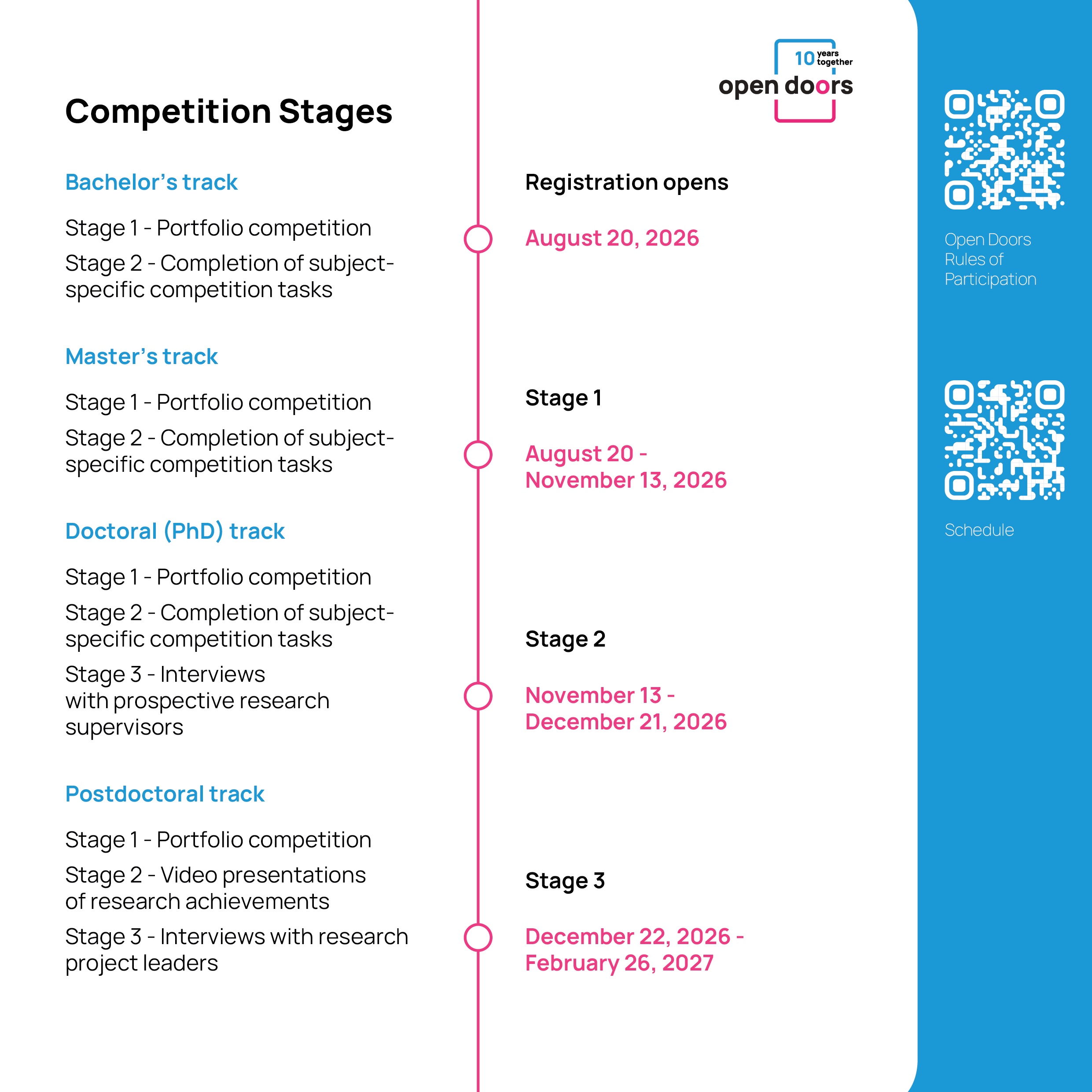
- The first round will be held online from August 20 to November 13, 2026 for all tracks. Participants should build their portfolio (fill in the necessary data and download the requested documents) in their accounts in accordance with the requirements for the portfolio structure described on the website of the Olympiad and pass the test.
- The second round for the Bachelor’s, Master’s and doctoral tracks of the Olympiad is organized in a proctored form and is held from November 13 to December 21, 2026, according to the schedule, which will be published on the Olympiad website and in the personal accounts of the participants.
- The second round for the postdoctoral track of the Olympiad is held from November 13, 2026 to December 21, 2026 and is organized in a form of video presentation of scientific results of participants.
- The third round of the Olympiad for the doctoral and postdoctoral tracks is held from December 22, 2026 to February 26, 2027 through online interviews with potential research supervisors and heads of research projects in accordance with the Olympiad schedule.
|
№ |
Profiles |
Bachelor’s programs implemented in Russian |
|
1 |
Engineering & Technology |
13.03.02 Power & Electrical Engineering 11.03.04 Electronics & Nanoelectronics 22.03.01 Materials Science and Materials Technology 22.03.02 Metallurgy 15.03.02 Technological Machines & Equipment 28.03.01 Nanotechnologies & Microsystem Technics 21.05.04 Mining |
|
2 |
Computer & Data Science |
09.03.01 Informatics and computer engineering 09.03.02 Information systems and technologies 09.03.03 Applied Informatics 27.03.03 System analysis and management |
|
3 |
Russian Language and Culture |
45.03.02 Linguistics |
|
4 |
Applied Mathematics & Artificial intelligence |
09.03.01 Informatics and computer engineering 09.03.02 Information systems and technologies 09.03.03 Applied Informatics 27.03.03 System analysis and management |
|
5 |
Earth & Environmental Sciences for Sustainability |
21.05.04 Mining |
|
6 |
Physical sciences & Technology |
03.03.02 Physics 11.03.04 Electronics & Nanoelectronics 13.03.02 Power & Electrical Engineering 15.03.02 Technological Machines & Equipment |
|
7 |
Chemistry and Materials Science |
22.03.01 Materials Science and Materials Technology 22.03.02 Metallurgy |
|
8 |
Economics & Econometrics |
38.03.01 Economics 38.03.02 Management 38.03.05 Business Informatics 27.03.05 Innovatics |
|
9 |
Business and management |
38.03.05 Business Informatics 38.03.02 Management |
|
10 |
Biology and Biotechnology |
19.03.01 Biotechnology |
Master’s Programs in English:
- Advanced Materials (22.04.01 Materials Science & Technologies)
- Quantum Physics for Advanced Materials Engineering (03.04.02 Physics)
- Data Science (09.04.01 Computer Science & Engineering)
- Innovative Software Systems: Design, Development & Applications (09.04.01 Computer Science & Engineering)
- UX/UI Design (09.04.03 Applied Computer Science)
- Mining Geology (20.04.01 Technosphere safety)
- Language and Communication (45.04.02 Linguistics)
- Management and Marketing of Technical Solutions and Digital Products (38.04.02 Management)
|
№ |
Olympiad profile |
Directions of training, implemented in Russian and English |
|
1 |
Engineering & Technology |
2.6.3 Foundry production |
|
2 |
Earth & Environmental Sciences for Sustainability |
1.6.20 Geoinformatics, cartography 2.8.3 Mining and oil and gas field geology, geophysics, surveying and subsurface geometry |
|
3 |
Physical sciences & Technology |
1.3.8 Condensed matter physics 2.2.3 Technology and equipment for materials and electronic devices production |
|
4 |
Chemistry and Materials Science |
2.6.6 Nanotechnologies and nanomaterials 2.6.17 Materials Science |
Potential supervisors of the postgraduate track participants
|
Olympiad profile |
Supervisor | |
|
Engineering & Technology | Andrey Koltygin | |
|
Engineering & Technology |
Vyacheslav Bazhenov | |
|
Engineering & Technology |
Alexander Korsunskii | |
|
Earth & Environmental Sciences for Sustainability |
Vasiliy Cheskidov (178 KB) | |
|
Earth & Environmental Sciences for Sustainability |
Alexandra Lipina (209.3 KB) | |
|
Physical sciences & Technology | Vasiliy Glazkov (511.7 KB) | |
|
Physical sciences & Technology | Dina Fazlizhanova | |
|
Physical sciences & Technology | Igor Zabenkov (117.9 KB) | |
|
Physical sciences & Technology |
Mikhail Fistul | |
|
Physical sciences & Technology |
Nataliya Kaputkina | |
|
Physical sciences & Technology |
Larisa Panina | |
|
Chemistry & Materials Science | Alexey Rodin (243.4 KB) | |
|
Chemistry & Materials Science |
Anton Kotov |
More video interviews with NUST MISIS faculty can be found in the media library.
|
Olympiad profile |
Project |
|
Engineering & Technology |
New nanomaterials for advanced energy systems |
|
Engineering & Technology |
Thermally and electrically conductive polymer matrix composite materials with controlled gradients and anisotropy of properties for energy accumulation and storage systems |
About MISIS University
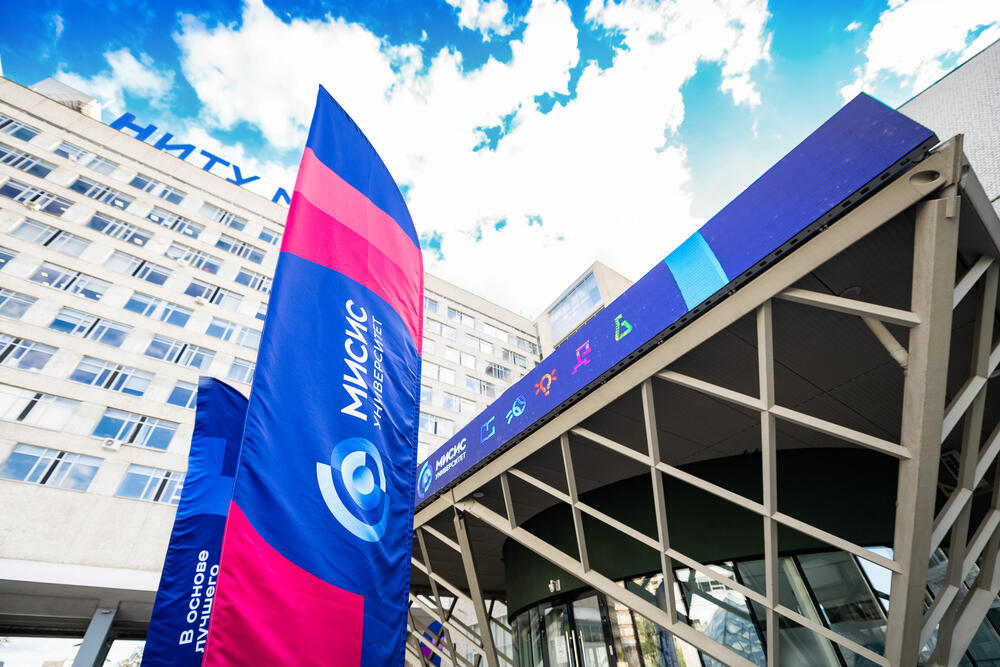
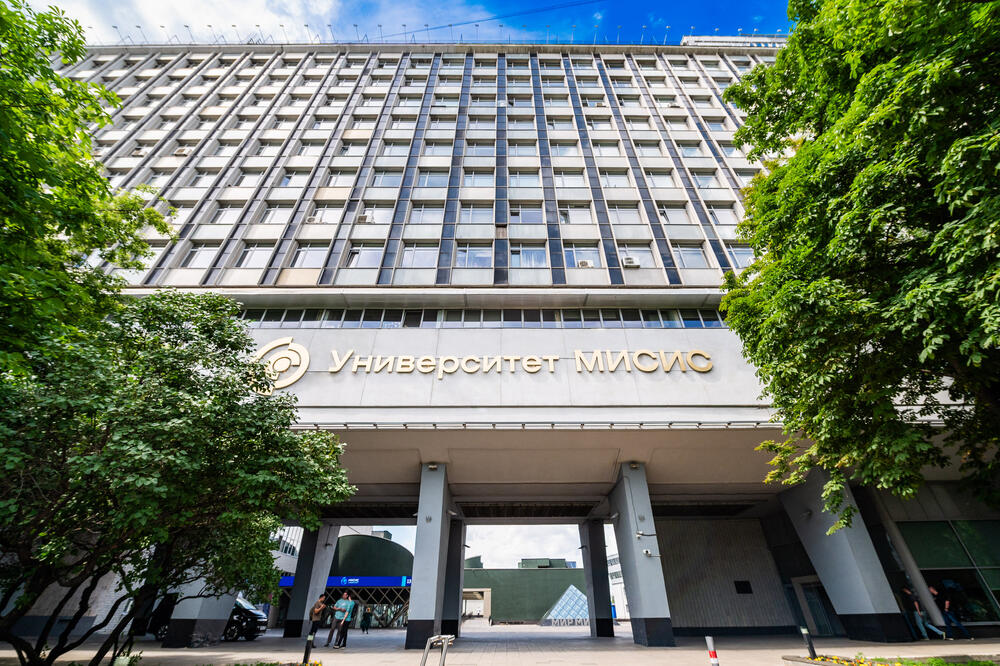
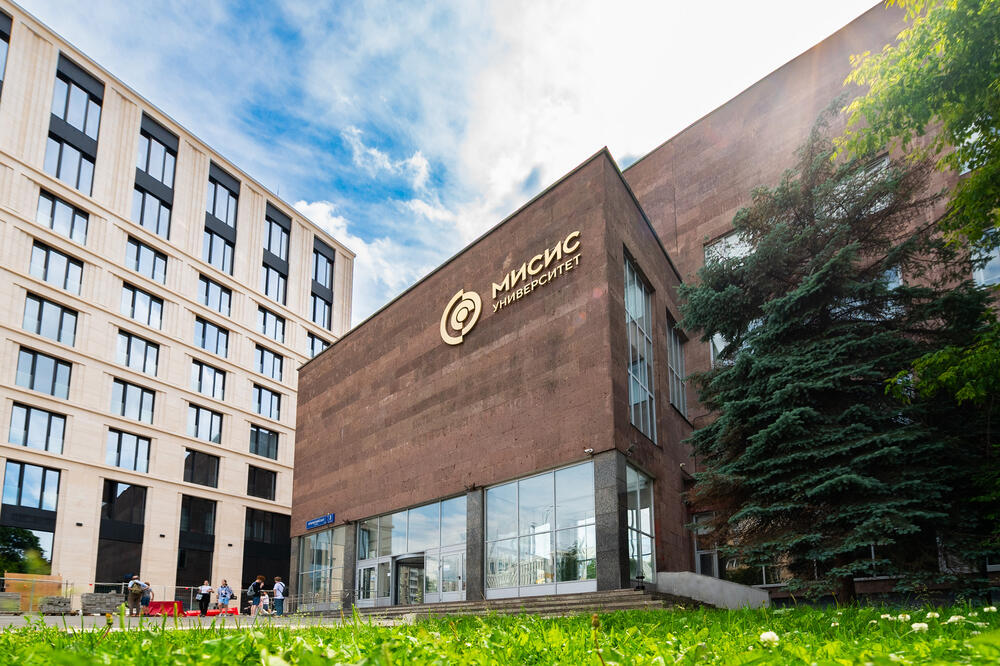
NUST MISIS is one of the most dynamically developing research & education centres in Russia attracting well-prepared applicants, leading scientists and talented teachers. The proportion of foreign students from more than 80 countries is 12%. The university pays special attention to the integration of science, education and innovation, as well as the formation of creative editions, which allows the maximum to develop the ability of each student.
Being one of the leaders of the national technological education, NUST MISIS is a full-fledged research center. The University takes leading positions in the world in THE, QS and ARWU subject ratings in 16 areas at once, entering the TOP-100 in the categories of “Mining&Mineral Engineering” (QS ranking) and “Metallurgical Engineering” (ARWU ranking). In the field of “Materials Science” NUST MISIS enters the group of 90+ best universities (QS ranking) and the 1st place among Russian Universities. More rankings are here.
NUST MISIS strategic aim is to strengthen its leadership in materials science, metallurgy, mining, and to significantly strengthen its positions in bio, nano- and IT-technologies. The University encompasses 10 institutions and 6 branches, including 2 branches abroad. More than 40 modern R&D laboratories and 3 world-class research centers, where the best world-famous scientists work, operate at the University. You can learn more about the scientists of NUST MISIS and their achievements in a special section featuring a portfolio collection.
MISIS University successfully implements joint projects with leading Russian and international high-tech companies. More information about NUST MISIS projects can be found here, and about strategic initiatives — here.
Among NUST MISIS’s international partner universities are University of Electronic Science and Technology of China (UESTC), University of Science and Technology Beijing (USTB, Harbin Institute of Technology, Harbin University of Science and Technology, Shenyang University of Chemical Technology (SUCT), Inner Mongolia University of Science and Technology, Chandigarh School of Design (SCSILL), Vietnam National University, Satbayev University, Razzakov Kyrgyz State Technical University, Navoi State Mining and Technological University, Karaganda State Industrial University, Rudny Industrial Institute, Brest State Technical University.
Admission and Study Features for International Students
International applicants must submit notarized translations of their documents along with their application package. Educational documents must be legalized in accordance with Russian Federation legislation. You can read more detailed information here.
To learn Russian, applicants can enroll in preparatory courses. During the preparatory course for international students in Moscow, students study the Russian language, academic speech style, and special subjects depending on their chosen program.
International students can continue studying the language at the NUST MISIS Russian Language Center. The Center regularly holds themed conversation club meetings and consultations for international students. To help students adapt better, excursions to Moscow museums are also regularly organized.
Career Support
International students of NUST MISIS are entitled to employment during training. Comprehensive support for international students in employment, career guidance, and practical training is provided by the Career and Practical Training Center. The university offers unique internships in leading companies across the mining, metallurgy, energy, construction, banking, high-tech, and digital industries, with prospects for future employment. NUST MISIS has over 1,600 partner companies.
Dorms
MISIS University is proud of its dormitories which are the winners of various competitions among student accommodations in Moscow and Russia. Dorms offer high-speed internet, computer and reading classes, laundries, even a sport complex with a swimming pool. All dorms are located within a
NUST MISIS does not assist with finding housing outside the campus, as dormitory places are provided to all international students and postdocs (including postdoc family members).
Student life
There are more than 60 student associations at MISIS University, where every student can realize themselves and demonstrate their abilities and talents. To create a welcoming environment for students from all over the world, NUST MISIS operates the International Friendship Club and the International Student Council. With their support, the annual Nationalities Day cultural festival, the International Sports Games, conversation clubs, Discover Moscow tours, and many other activities are held.
Testimonials
Mohammed Basit Amin, Open Doors Winner Mohammed Basit Amin, Open Doors Winner
Master’s degree in Data Science“The university level in Russia is very high. For this reason, I chose MISIS University. Its environment, infrastructure, and students are the best!”.
Oscar Andres Arrieta Villalba, Colombia Oscar Andres Arrieta Villalba, Colombia
PhD student, Department of Engineering Cybernetics, College of Computer Sciences“I’ve always been passionate about technology, and I was looking for a place that would help me turn that passion into something real. That’s how I found MISIS University — one of the top universities in Russia for science and innovation”.
Monis Ali Qureshi, Pakistan Monis Ali Qureshi, Pakistan
Master’s degree in Data Science“NUST MISIS is a national research university that has modern labs and engineering centers where you can work with leading scientists and engineers on state-of-the-art technology and cutting-edge projects. The university offers high-quality education in various fields, available in English and Russian.
For me, NUST MISIS is a great opportunity to grow academically, professionally and personally”.
Phan Thi Như Anh, Vietnam Phan Thi Như Anh, Vietnam
Bachelor’s degree in Applied Informatics“At NUST MISIS, you can study and expand your knowledge in a wide range of disciplines, work with leading scientists and engineers on advanced technologies and innovative projects. For me, NUST MISIS is an incredible opportunity to grow academically, professionally, and personally. You should come and join us! See you in Moscow soon!”
Christian Baldi, Italy Christian Baldi, Italy
Master’s degree in Communications and International Public Relations“I wanted to study in Russia and was very interested in the Master’s program ‘Communications and International Public Relations’
because I earned my Bachelor’s degree in Communication Sciences. One of the factors that influenced my choice was that NUST MISIS is a very modern and high-level university located in Moscow.
The first thing I appreciated was the atmosphere in the department: the professors and staff were always friendly and ready to help. For example, they helped me deal with issues related to my limited knowledge of the Russian language.
Most of the courses offered by the program were very interesting and useful for me, even those not directly related to my professional field. I have very fond memories of my studies — it was a wonderful and warm chapter of my life”.
Eleonora Zelenova, Russia
PhD student, Laboratory of Tissue Engineering and Regenerative Medicine, College of Biomedical Engineering“I am a bioengineer. When I first came to MISIS University, I immediately realized that this was the place where I wanted to grow and develop. Here, we have the opportunity to work with large companies and create innovative and commercially successful solutions. In addition to materials science and engineering skills, we also gain entrepreneurial ones.
At NUST MISIS, I’m not only involved in science. I volunteered on international projects, and among the many creative groups, I chose dance and joined a hip-hop team.
MISIS University offers numerous opportunities for self-realization and helps you become a professional in your field. I sincerely love what I do and am happy to be part of the MISIS world”.
Anastasia Khalimova, Russia Anastasia Khalimova, Russia
College of Technologies“When I applied, I knew almost nothing about engineering — I just dreamed of creating: inventing, designing, building with my own hands. At MISIS University, I found a place where you can grow, build a team, and bring any idea to life.
Now I lead the Student Design Bureau. Together, we create robots — from ideas and sketches to programming and final assembly. Our battle robot won at the ‘Robot Battle’, and our tour guide robot traveled with us to the Congress of Young Scientists. We continue to grow, improve our skills, and take part in projects for companies — this allows us to gain real-world experience even before graduation.
NUST MISIS isn’t just about technology. I tried myself as a mentor for first-year students, communicated with international students through the International Student Council, and learned programming in our Hackathon Club. I also promote engineering! I participate in various open days, congresses, and podcasts to share my experience and show that engineering is incredibly exciting! NUST MISIS became more than just a university for me — it’s a place where you can grow, try, make mistakes, and find yourself”.
Vukile Makhaye, South Africa Vukile Makhaye, South Africa
Specialist degree in Geotechnologies for Subsoil Development“The most important thing for me at NUST MISIS is the opportunity to interact with representatives from different scientific fields and with international researchers. The university organizes many scientific conferences and other events that help you get a broad view of global scientific research, learn new things, and discover related areas.
My advice to first-year students is to find the right motivation: don’t give up, and you’ll succeed!”
Kirill Gakh, Russia Kirill Gakh, Russia
Specialist degree in Mining and Geological Information Systems“At MISIS University, I had the opportunity to fully realize my potential! Under the guidance of my academic advisor, I actively participate in scientific research. We study the specifics of mining and geological information systems, analyze modeling indicators in these systems, and publish scientific articles. This helps me better understand the IT side of mining.
An important part of the educational process is internships. I had the chance to work in two consulting companies in the mining industry and visited iron ore and copper deposits. Hiking, sampling rocks and minerals, data analysis, preparing presentations and reports — this is the experience that helps you become an in-demand specialist. MISIS University supports student initiatives and immerses you in its ecosystem in the most comfortable and engaging way. Many doors are open to us here, and nothing is impossible. The most important thing is to want it!”
Information about Moscow and University location
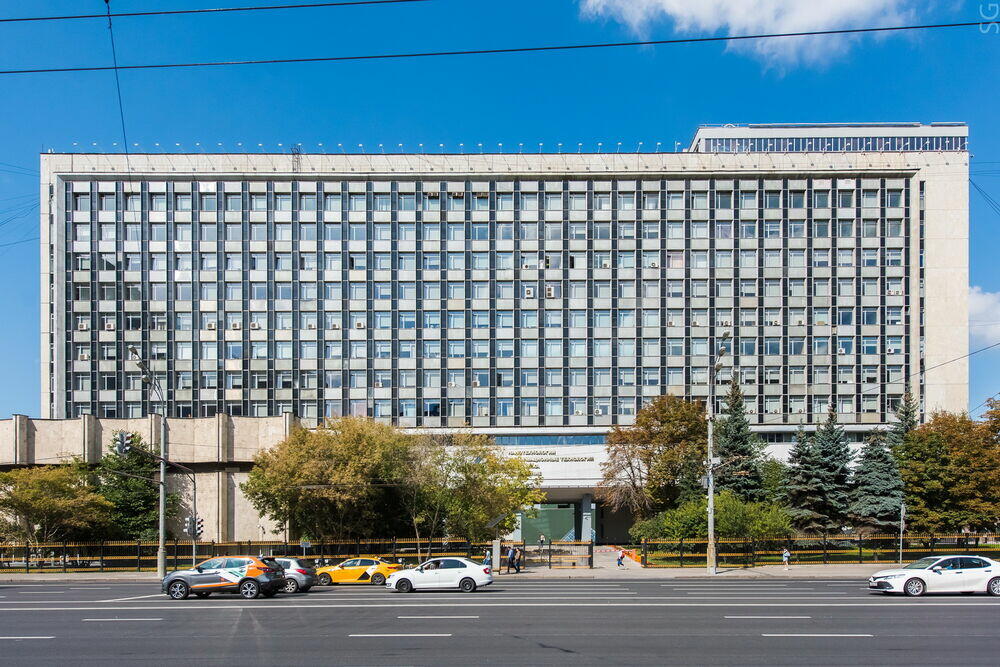
NUST MISIS is located in the heart of Moscow (2 km from the Kremlin). Everything you might want for a convenient student life is here: accessibility by all means of public transport as well as full range of facilities for academic and student services within reach. All international students are provided with accommodation at the residence halls with developed infrastructures.
Moscow is the largest metropolitan area in Russia and Europe, with a permanent population of over 13 million people. Moscow’s climate is humid and moderately continental, with clearly defined seasons (a moderately cold winter with thaws and a warm summer). January is the coldest month with an average temperature of −9.3°C (temperatures can drop to −30°C). July is the warmest month, with an average temperature of 18.2°C (heatwaves up to 36°C are possible).
The Moscow aviation hub includes four international airports: Sheremetyevo (SVO, the largest airport and hub of Russia’s biggest airline, Aeroflot), Domodedovo (DME), Vnukovo (VKO), and Zhukovsky (ZIA).
An added benefit to studying at MISIS University is the opportunity to explore Moscow. Rich in culture and history, Russia’s capital city is an amazing blend of old and new. In addition to the world-renowned Kremlin and Red Square, this cosmopolitan city is home to a multitude of museums, theatres, parks, and palaces. It also possesses a convenient and inexpensive mass transit system, including several metro stations that are cultural heritage sites in and of themselves!
In addition to its historical sites, Moscow is also home to many restaurants, cafes, and night clubs. It provides plenty of shopping opportunities for those who are into seeing and partaking in the latest fashions.
Moscow is a city of contrasts that offers a broad variety of attractions. You will certainly want to make sure to attribute some of your time to discovering all of the wonders of Moscow! More detailed.
The minimum student living cost in Moscow is at least $500 per month. This basic monthly budget includes:
- dormitory accommodation: $29–78;
- Meals in student canteens and home cooking: $300;
- public transportation: $16;
- communication, stationery, household items, miscellaneous expenses: $150.
Сontacts
If you have any questions, you are always welcome at the Department of Professional Navigation and Admission of NUST MISIS (Moscow, Leninsky Prospekt, 4, B-131). You can also contact us by email at welcome@misis.ru or by phone using the numbers below: